Open Food Data Hackdays: 10 & 11 February 2017
- Hackathon
10–11 February 2017, 08:30 @ Zürcher Hochschule der Künste (ZHdK), Toni-Areal, Pfingstweidstrasse 96, 8005 Zürich
On 10 and 11 February 2017 the first Open Food Data Hackdays of the «Business Innovation food.opendata.ch» programme took place simultaneously at the Zurich University of the Arts in the Toni-Areal and at EPFL in Lausanne. Some 200 developers, designers, nutrition experts, entrepreneurs and students spent 24 hours building prototypes with open food data – above all EPFL's new product database openfood.ch. Challenges came from Eaternity, Codecheck, GS1 Switzerland, Migros Business Intelligence, Elsa-Mifroma, the Swiss consumer protection foundation, Open Food Facts, BeerDeCoded, Foodways and nutriMenu, among others.
On Saturday afternoon more than twenty teams presented their results: a nutrition adviser as a chatbot, apps for bargain hunters and climate savers, a receipt analysis tool, a database of local producers in the canton of Vaud, a molecular «tree of beers» and much more.
A jury chose six projects that food.opendata.ch then supported for about a year with coaching, infrastructure and funding: Jarvis the Nutritionist, Open Receipts and NutriMenu from Lausanne, MeatStory, Foodly and FoodImmune from Zurich. The Hackdays were made possible by the Engagement Migros development fund, with the partners Innovaud and EHL and the hosts ZHdK and EPFL.
Photos
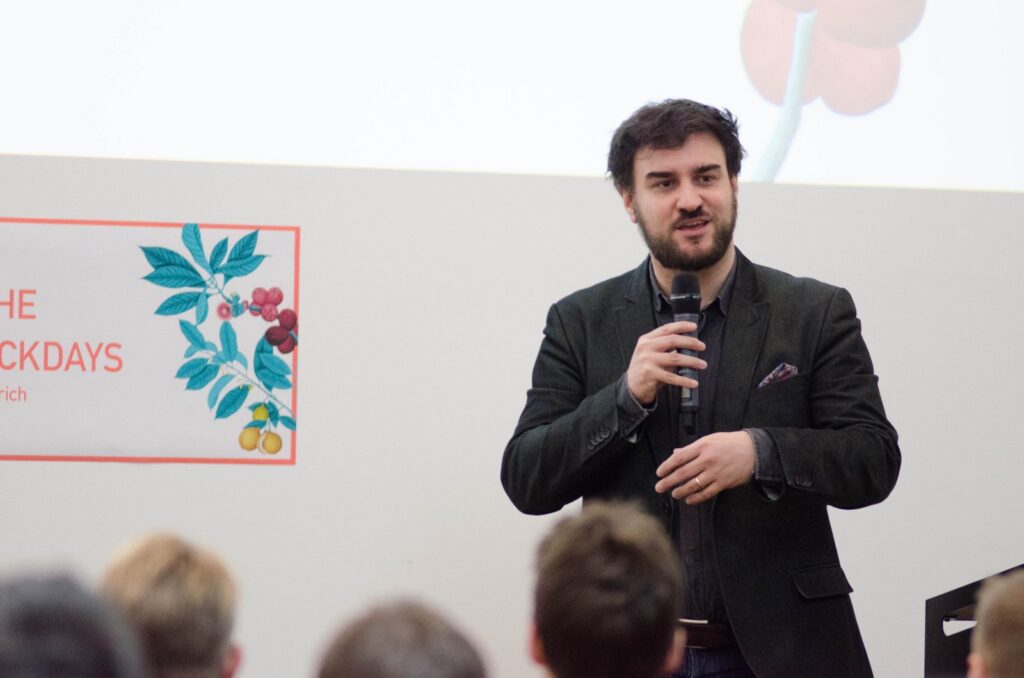
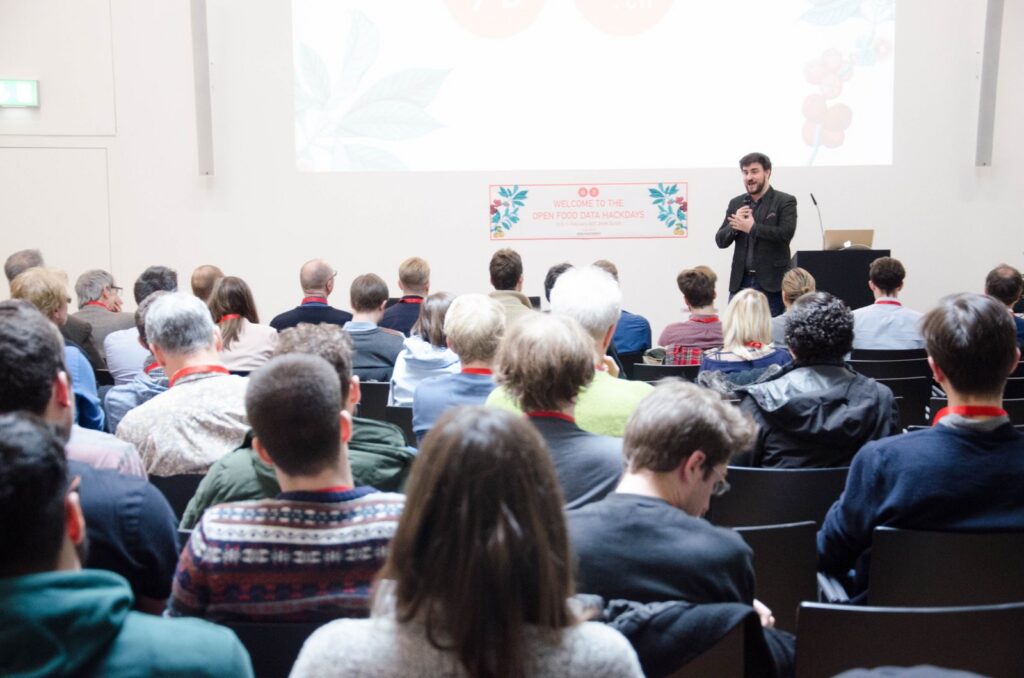
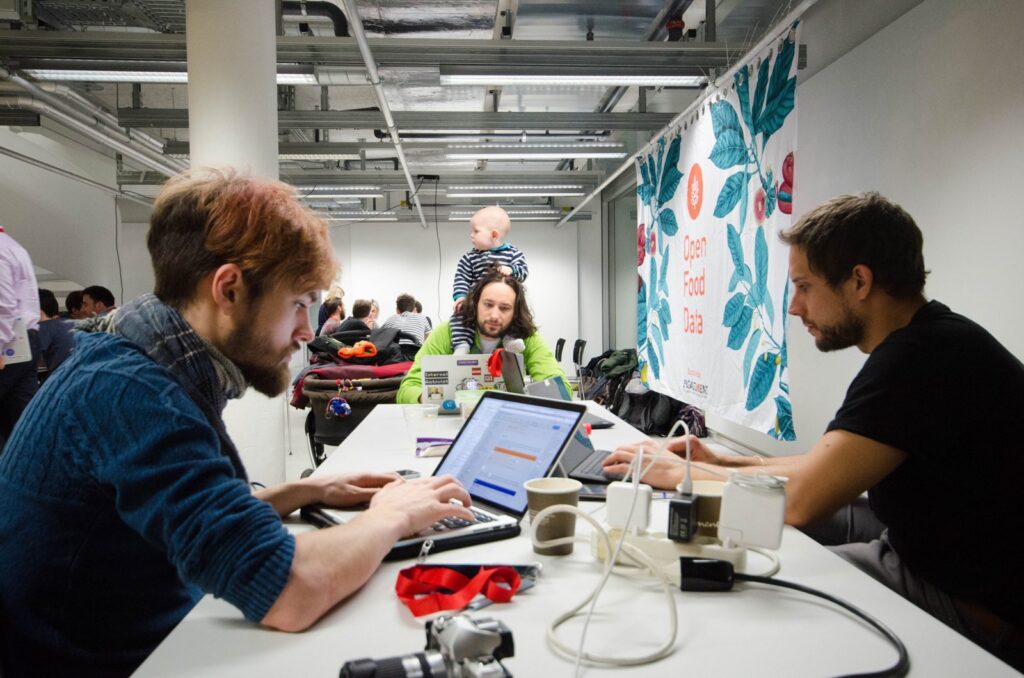
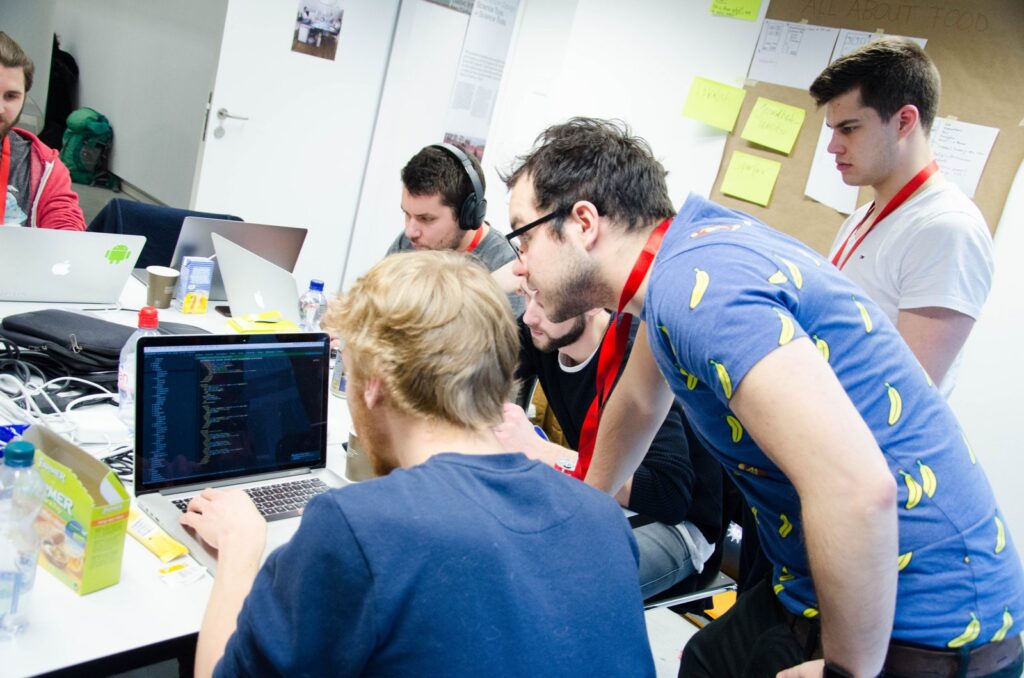
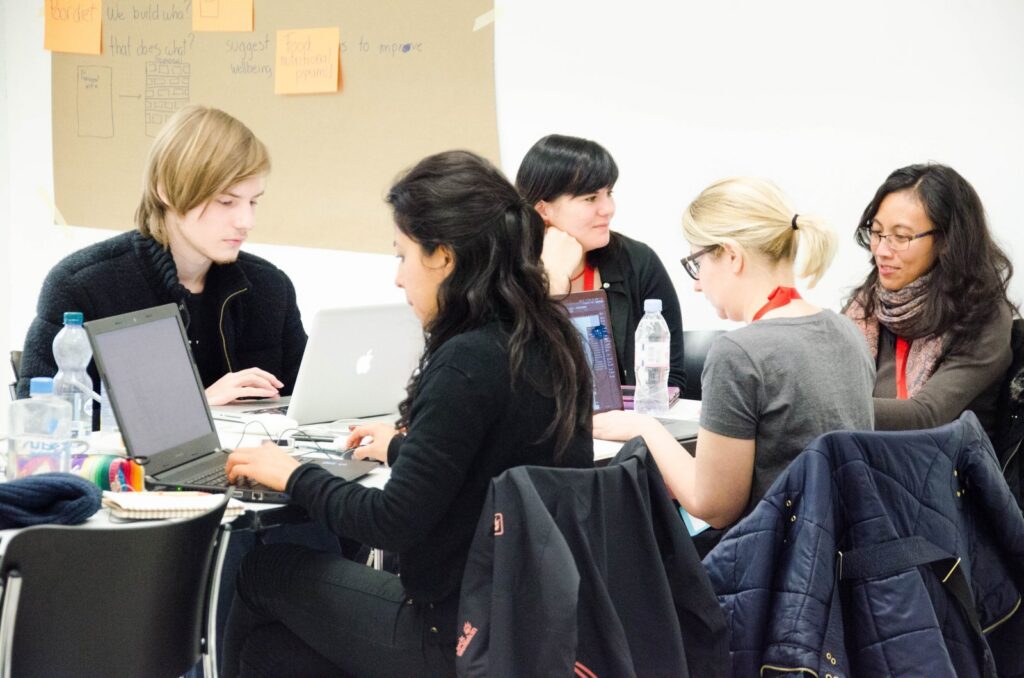
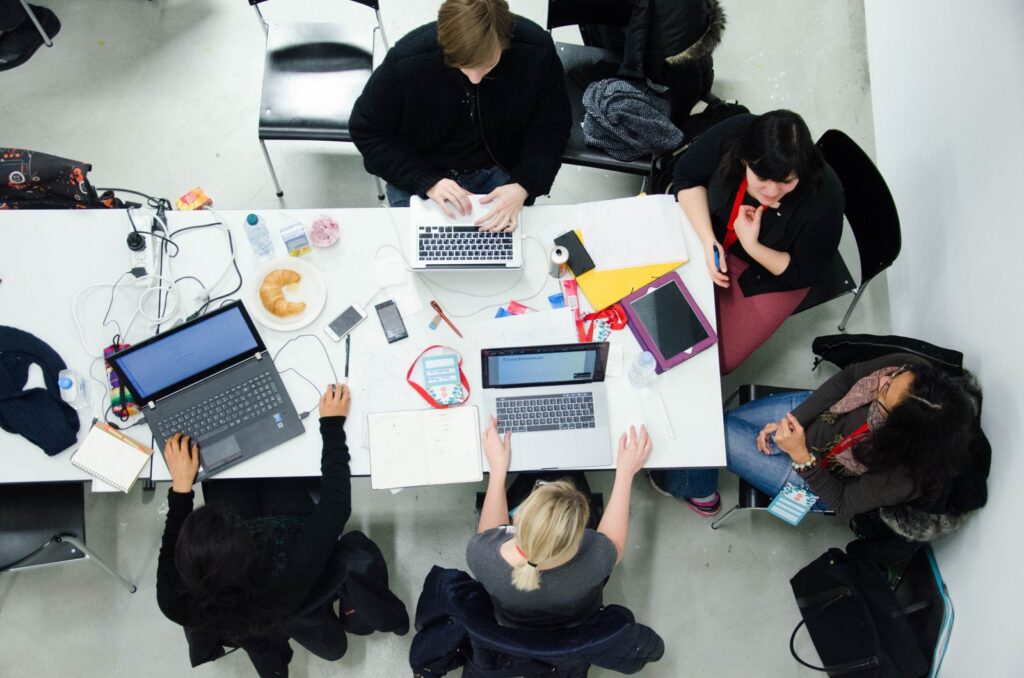
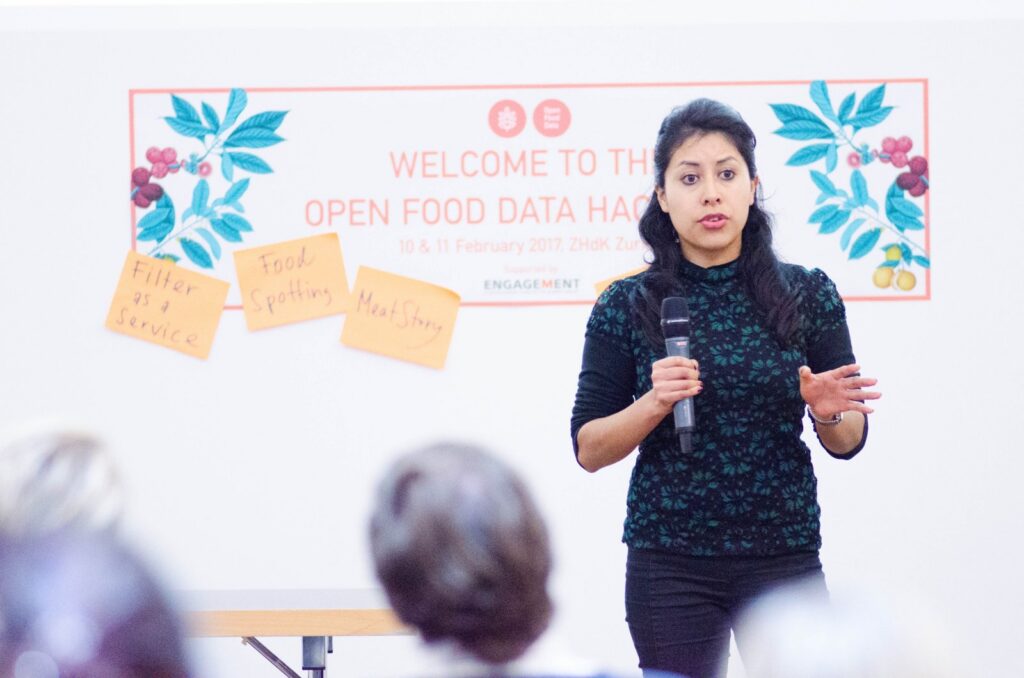
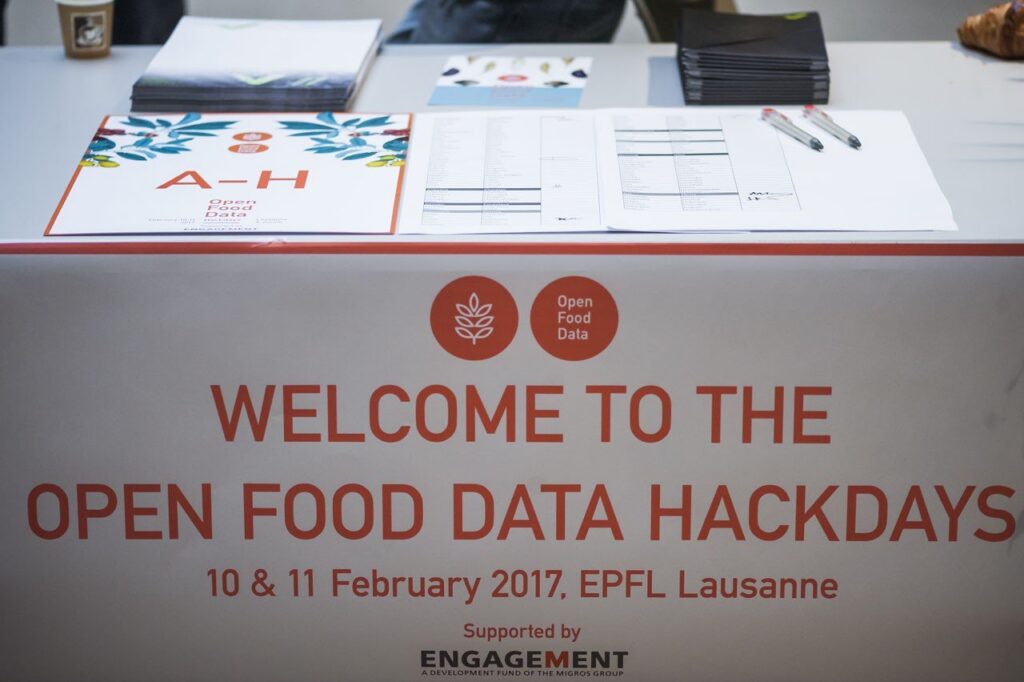
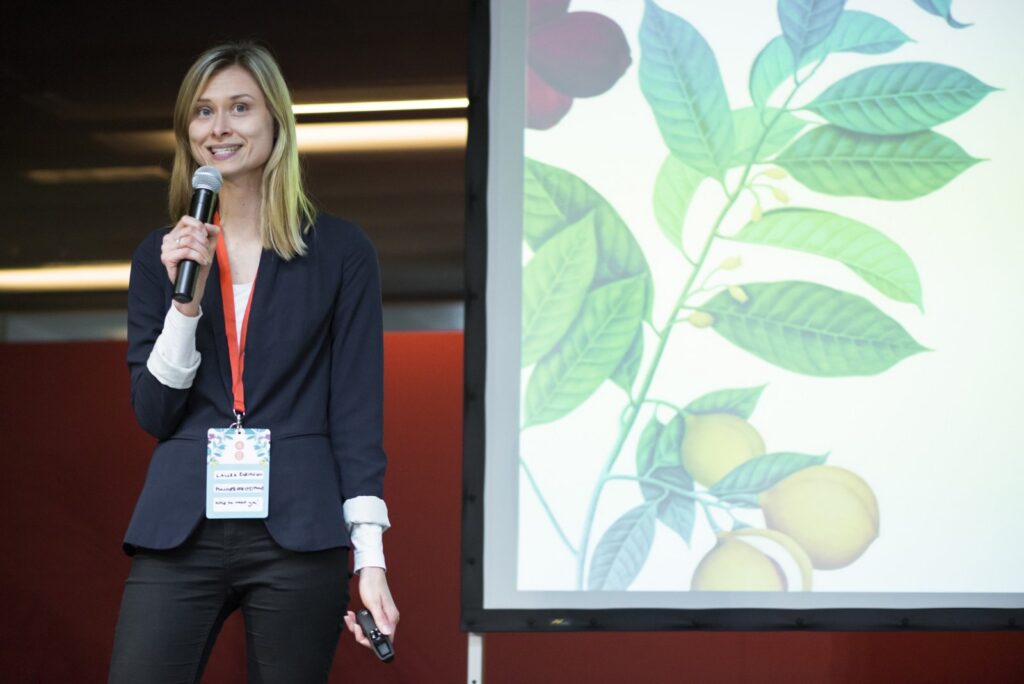
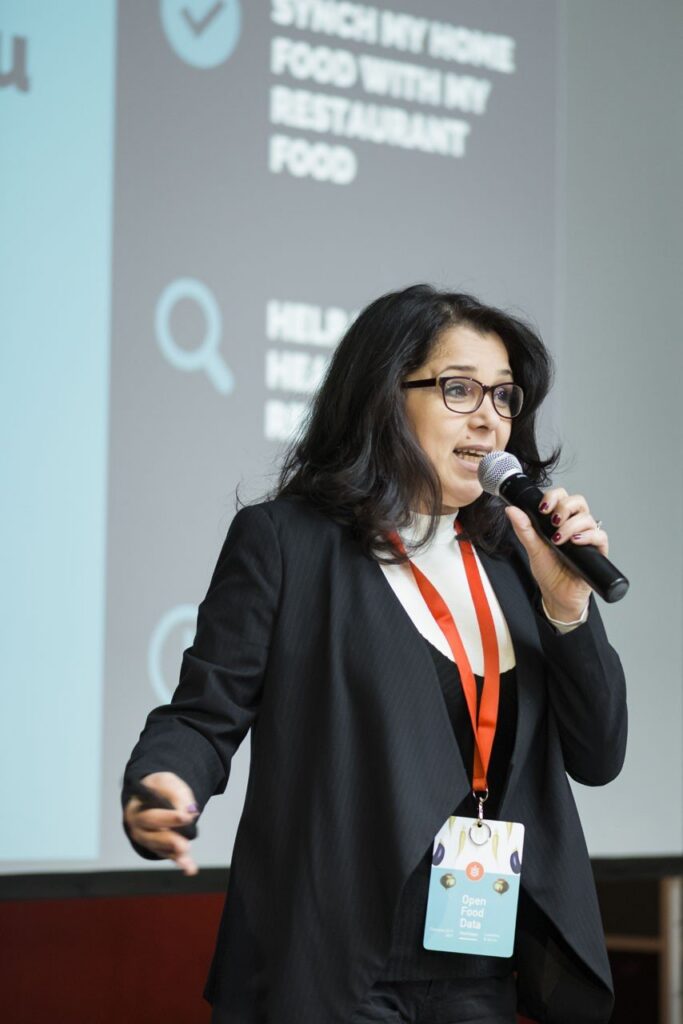
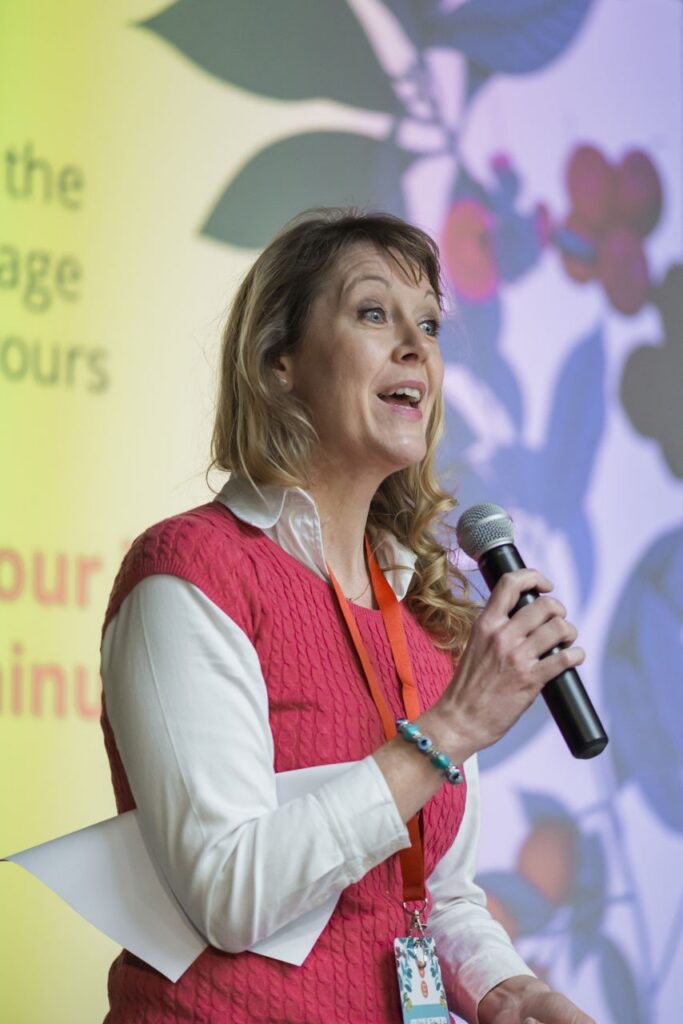
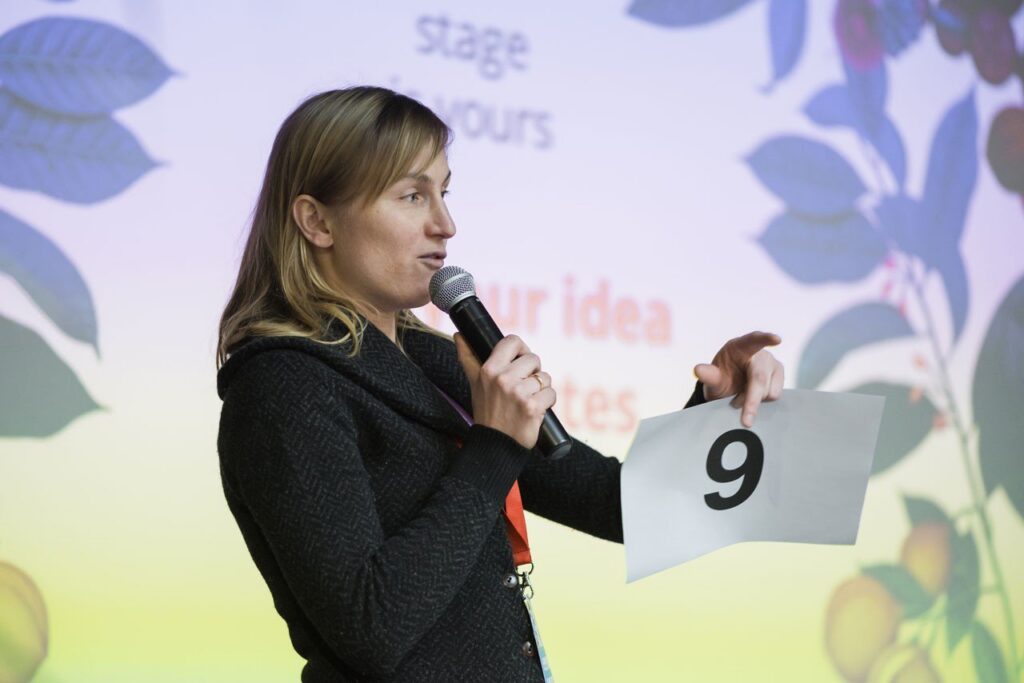
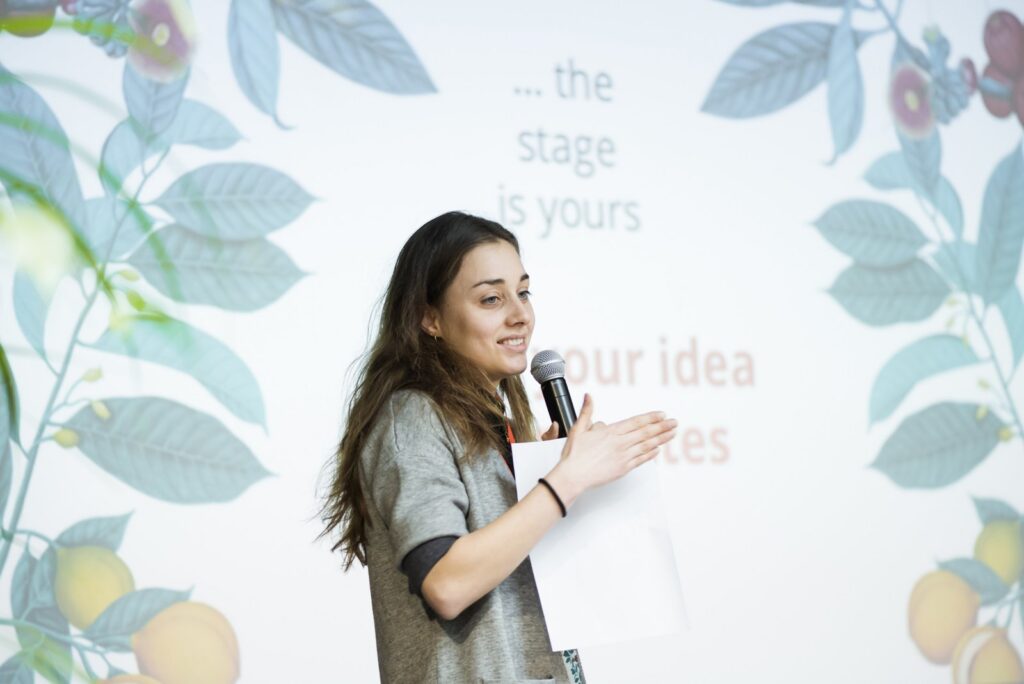
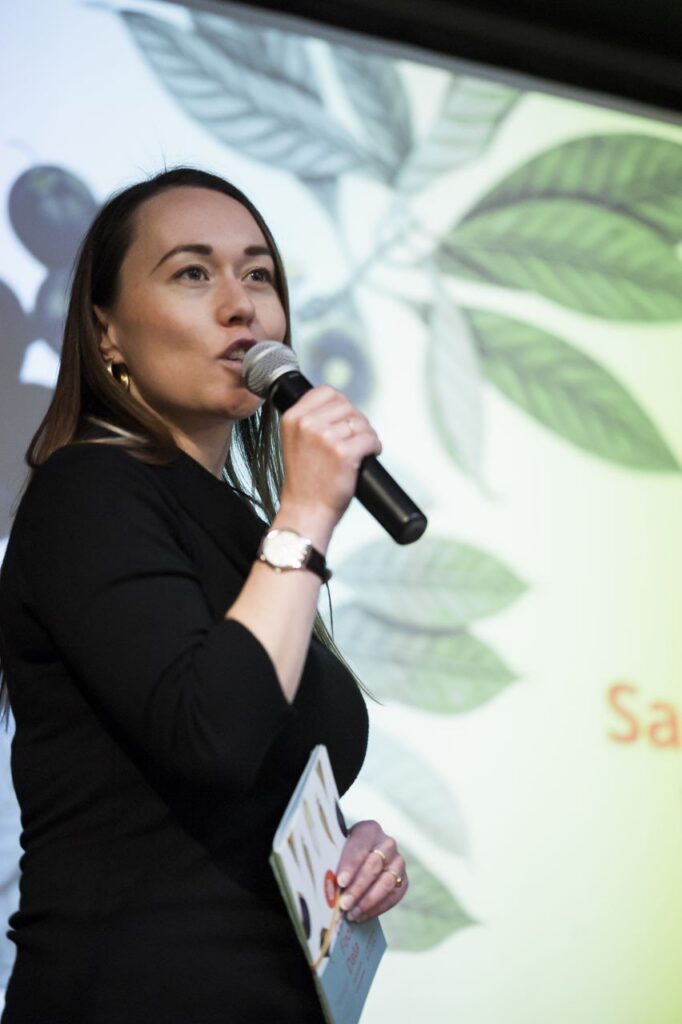

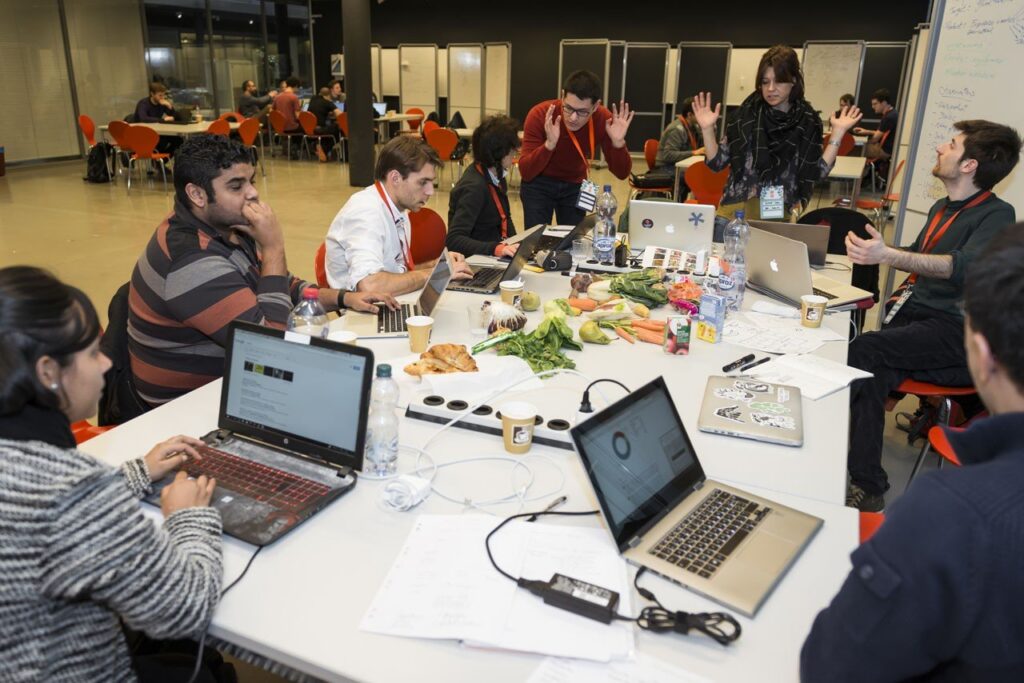
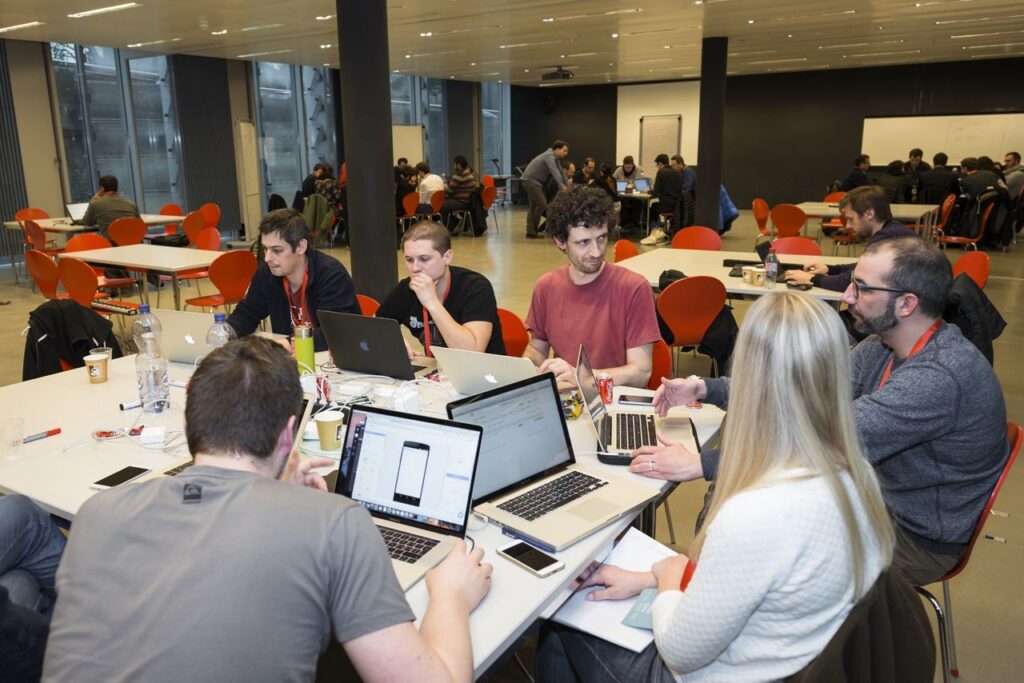
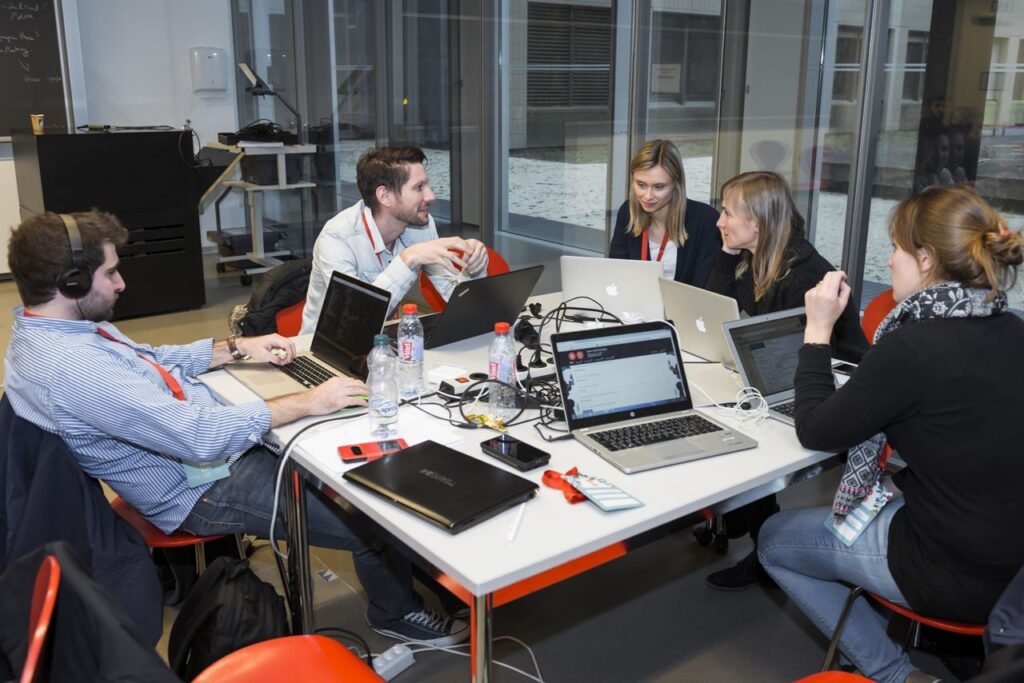
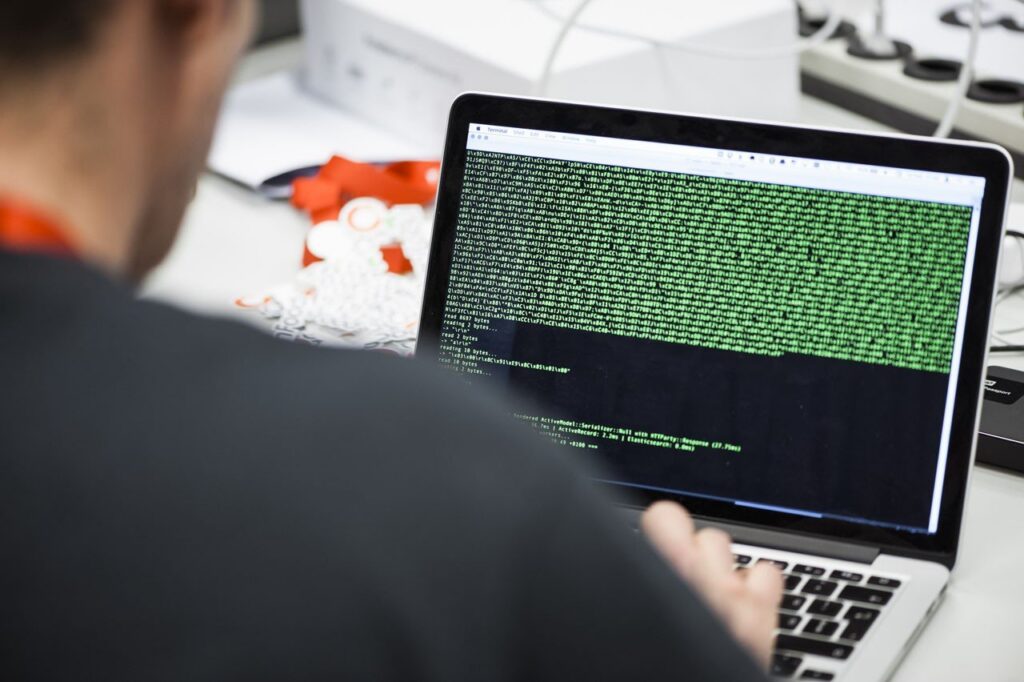
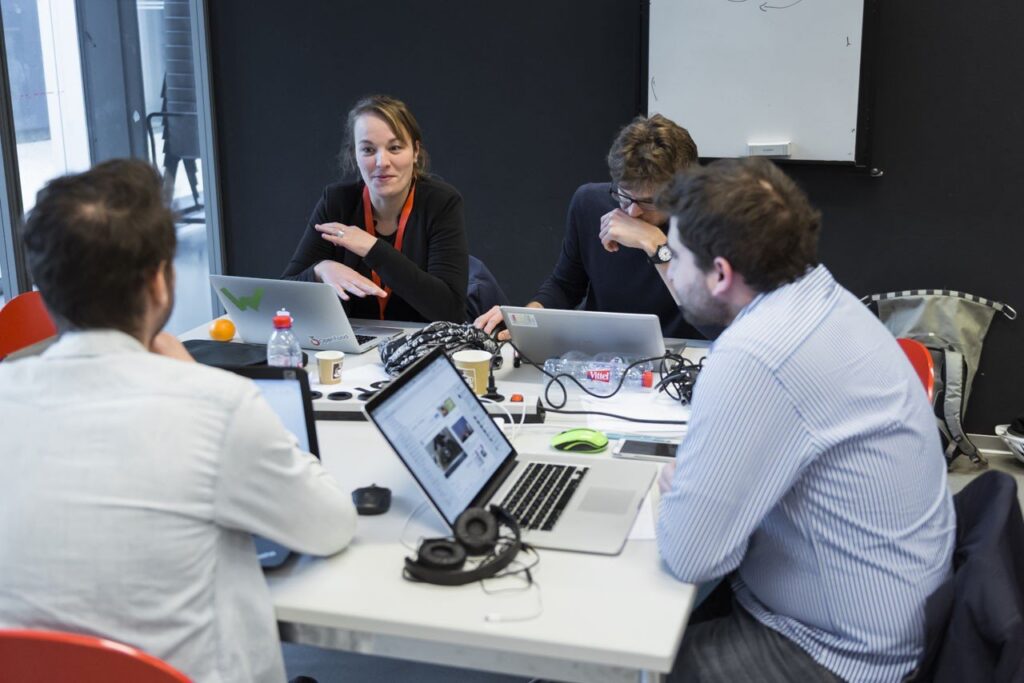
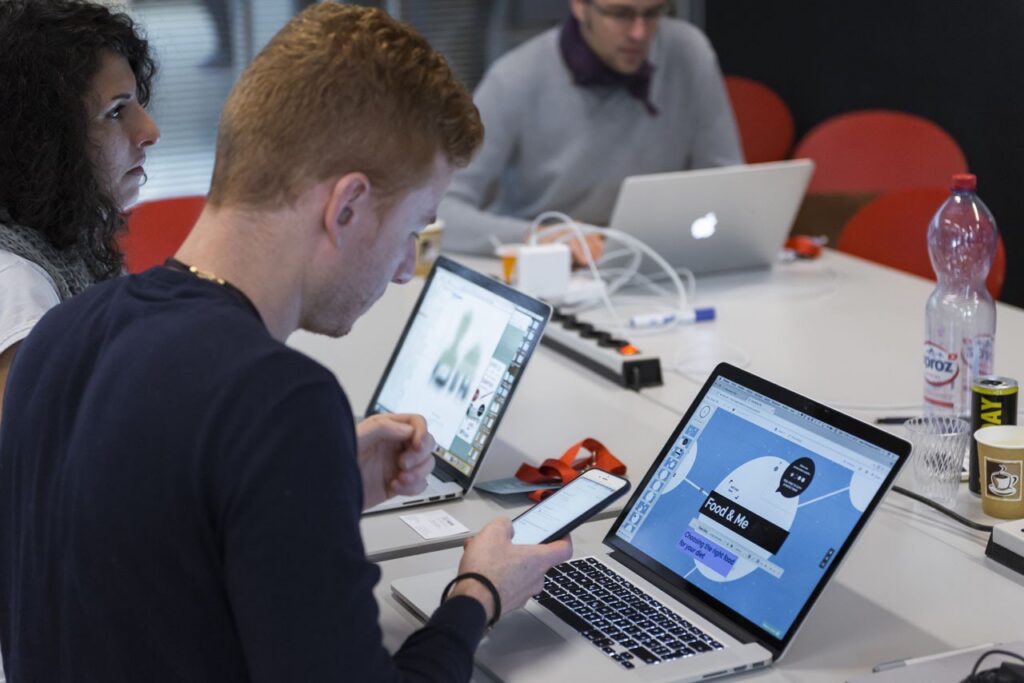
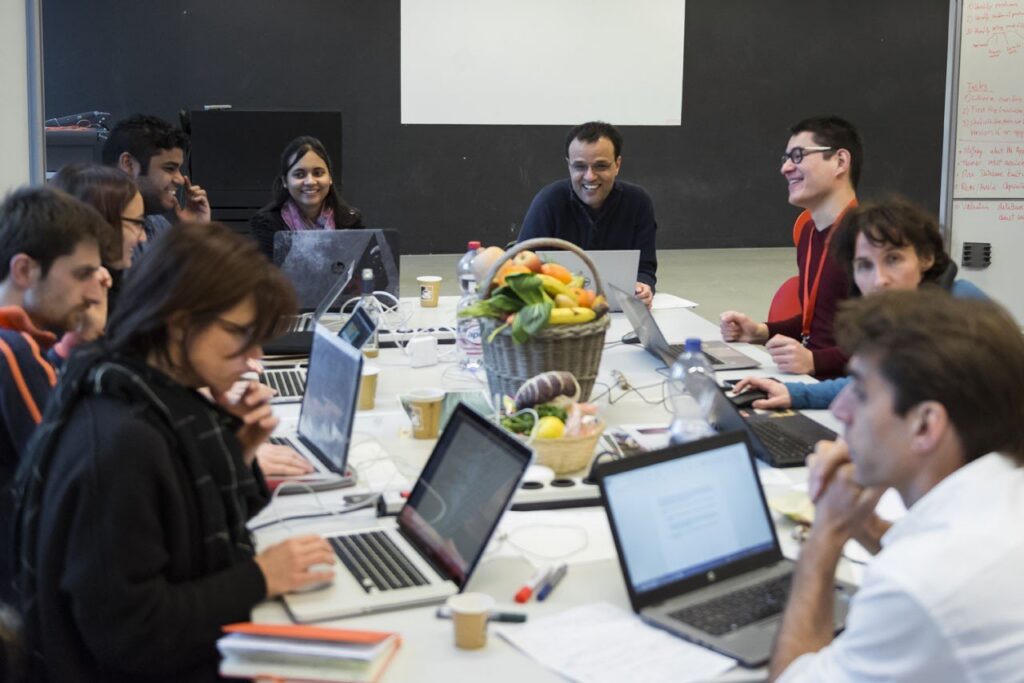
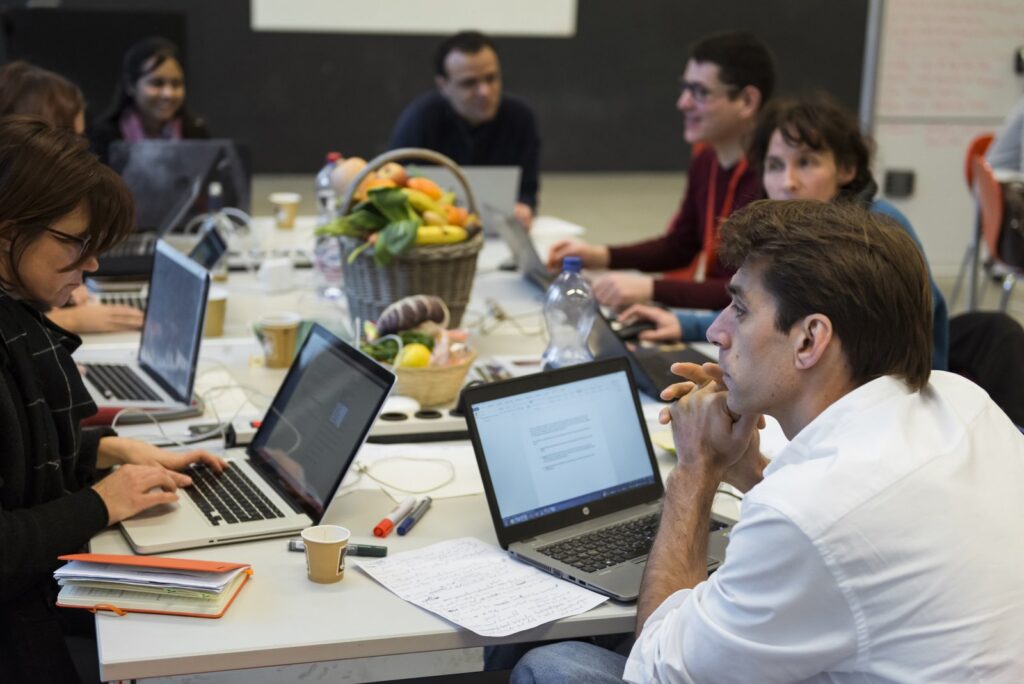
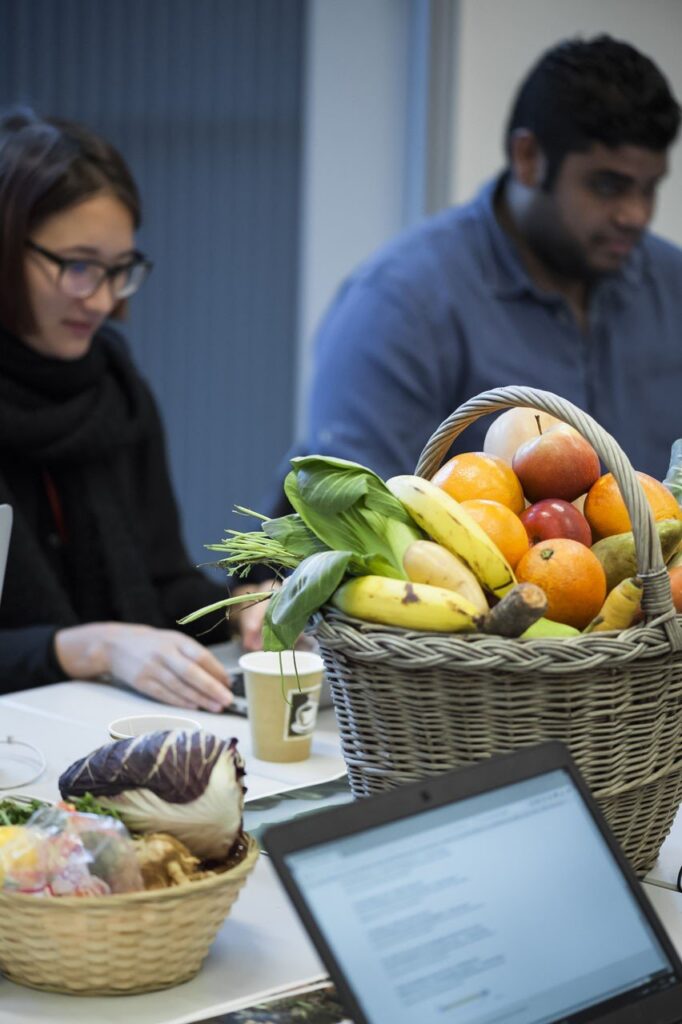
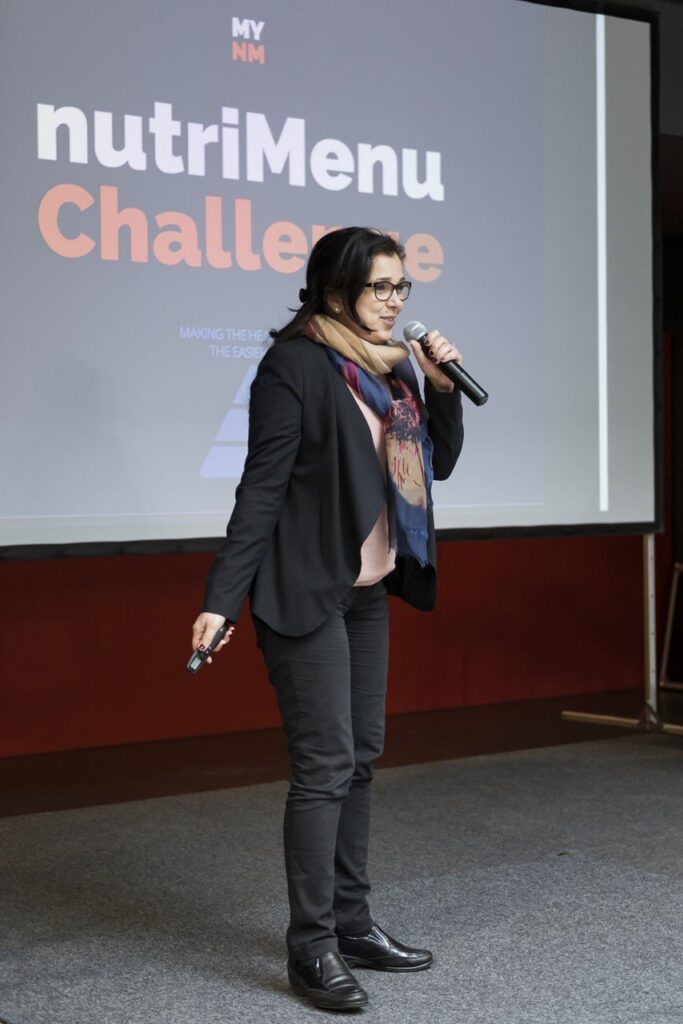
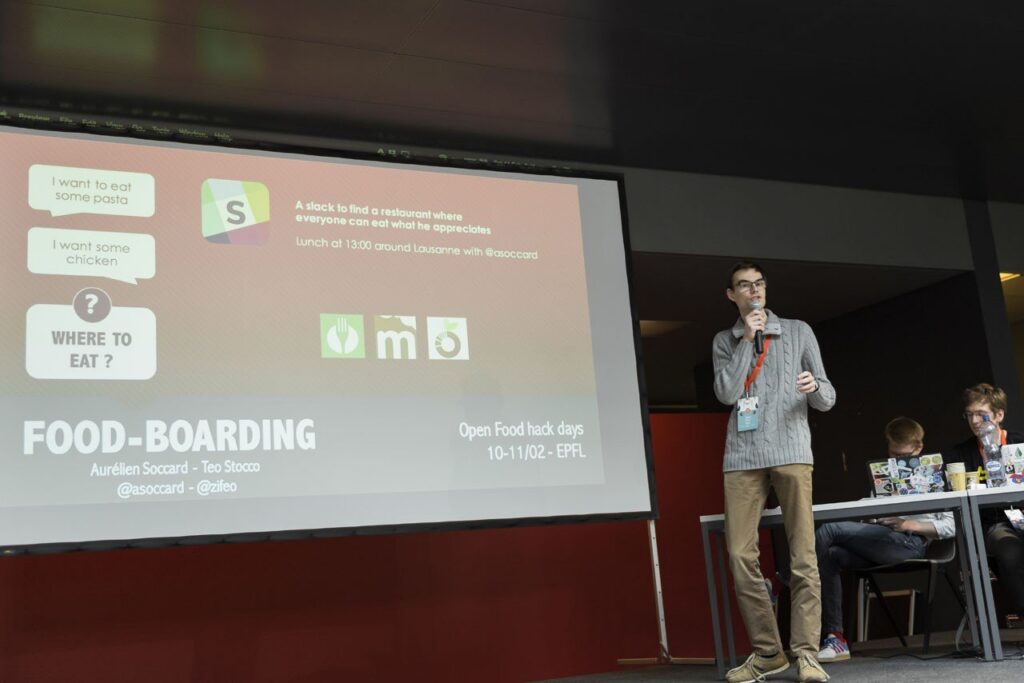
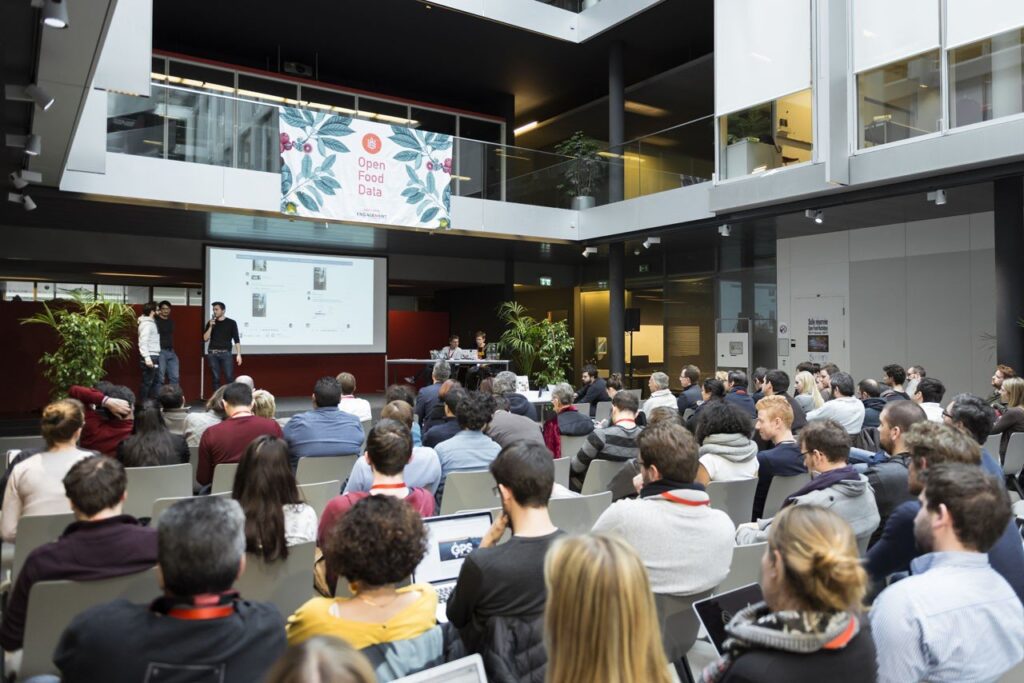
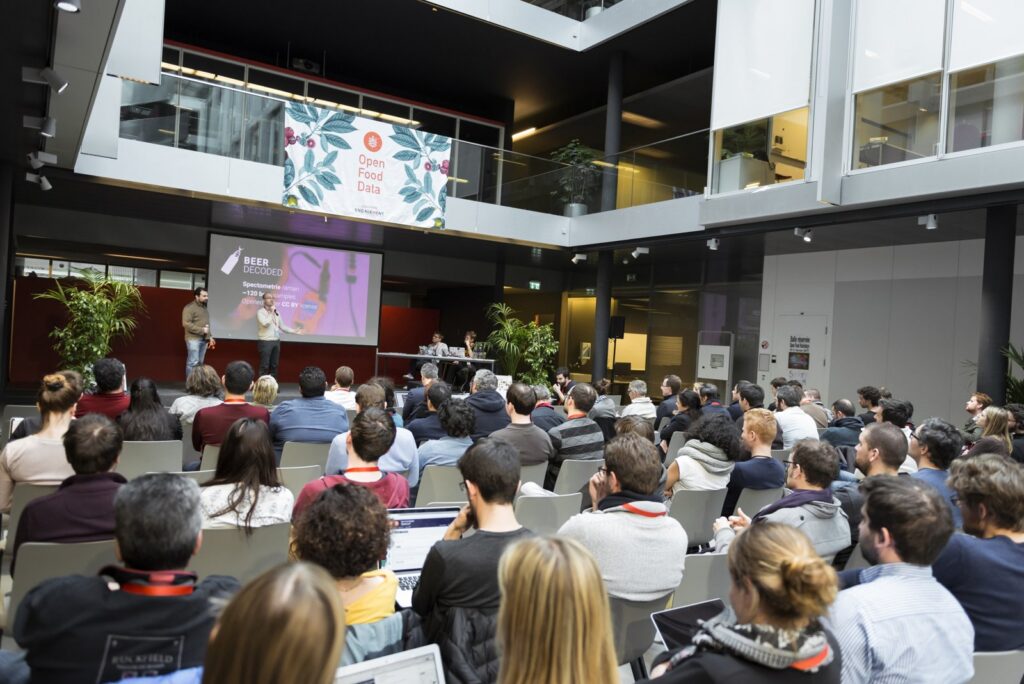
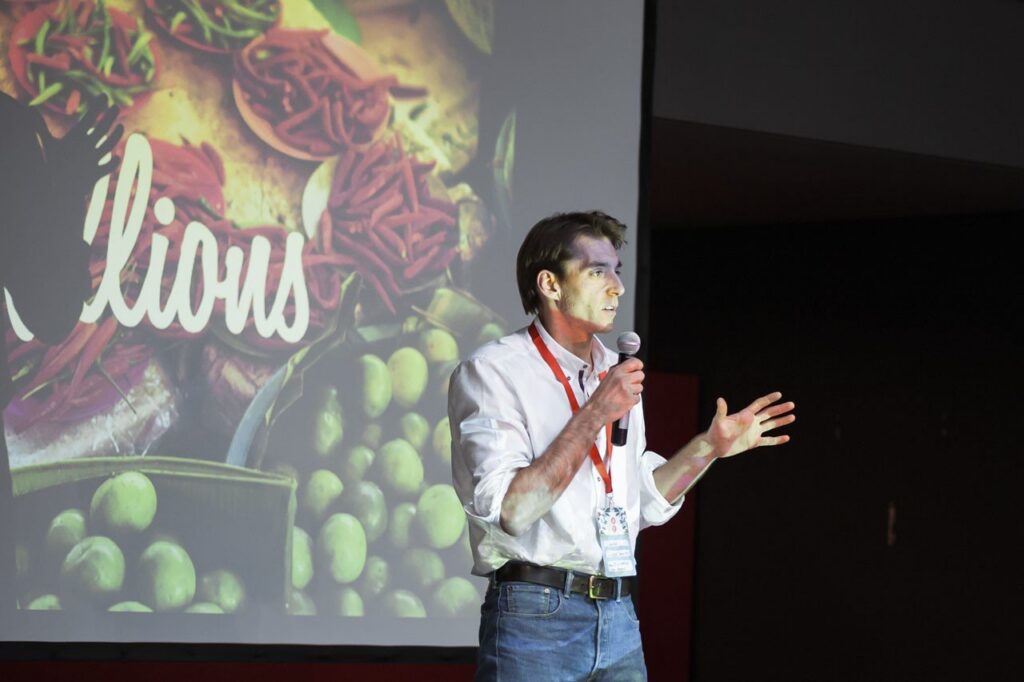
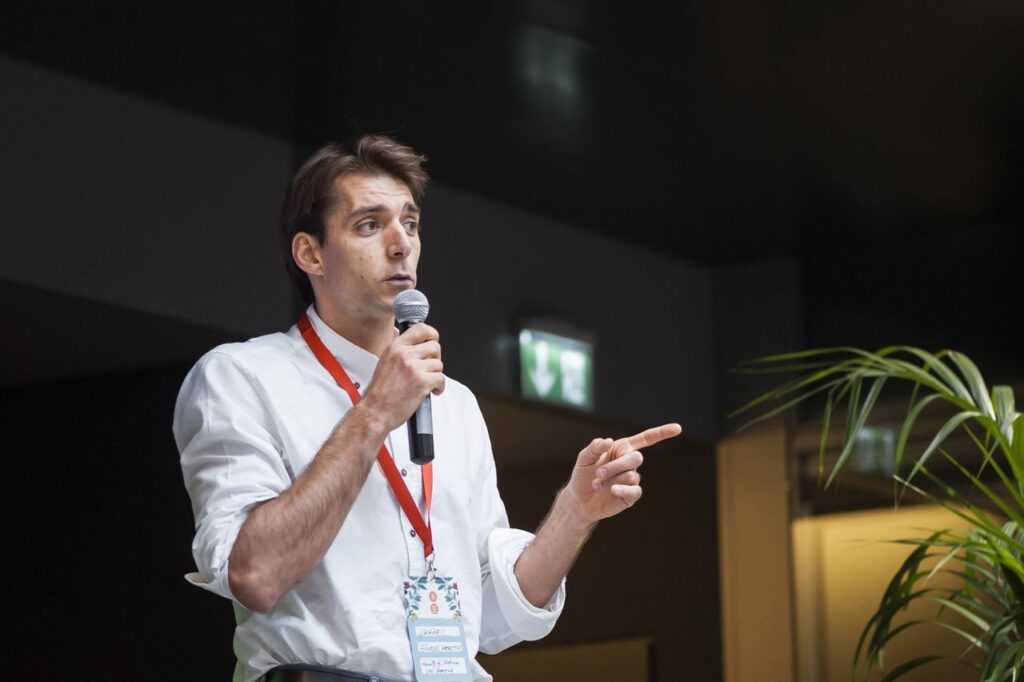
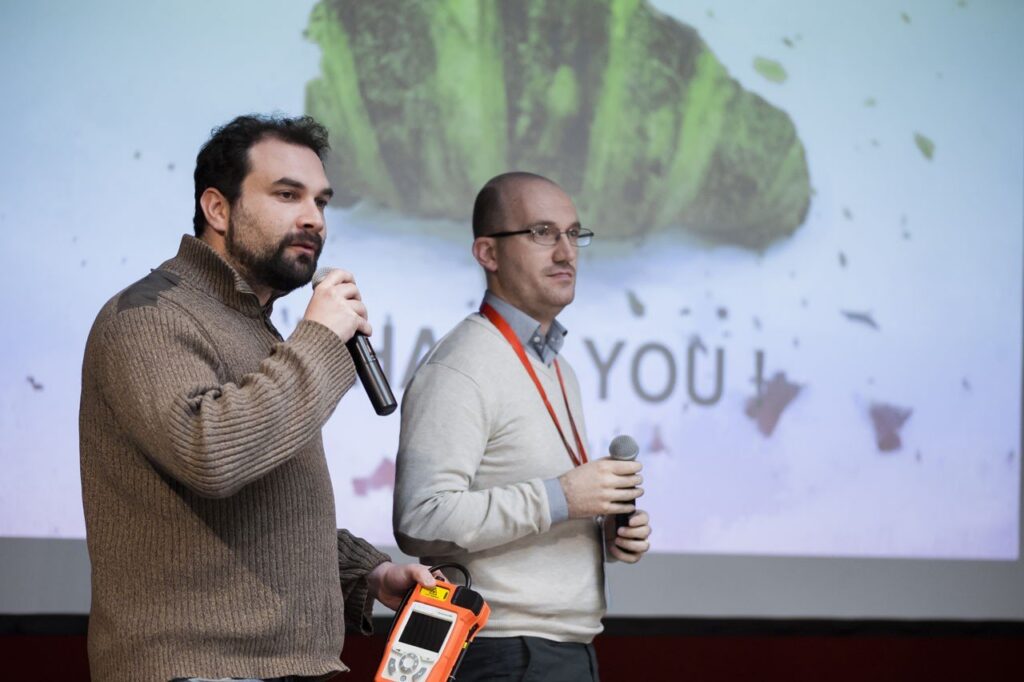
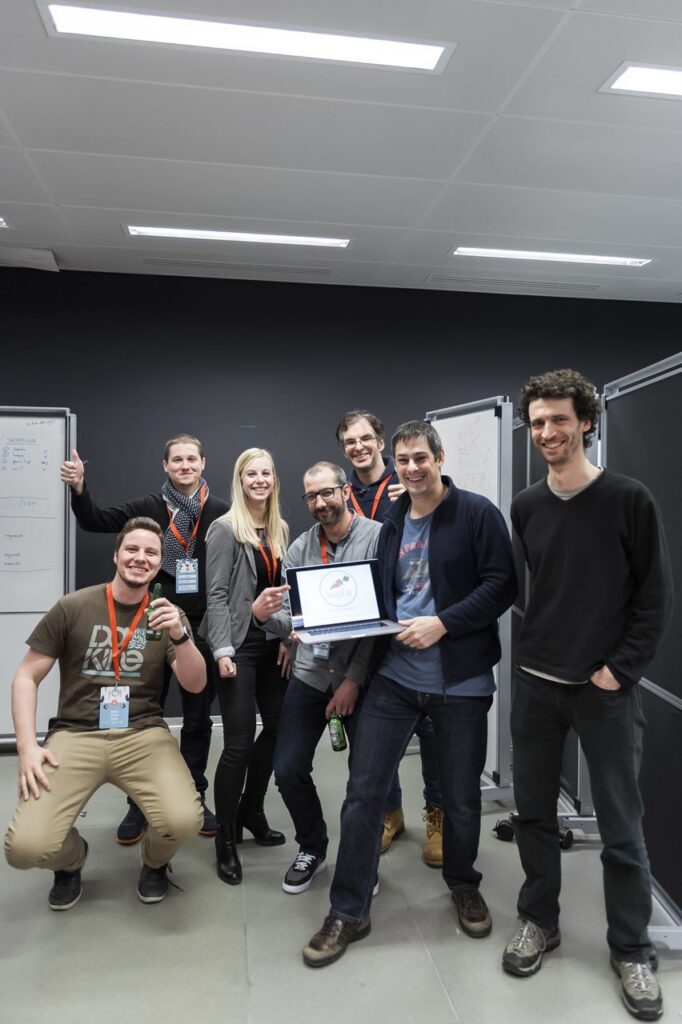
Photo: Ivo Näpflin, Anouk Ruffieux
Documentation and recordings
- Medienmitteilung Opendata.ch / Engagement Migros, 15.02.2017: Food Hackdays – Hacker nehmen sich 24 Stunden lang den Menüplan vor
- Communiqué de presse Opendata.ch / Engagement Migros, 15.02.2017 : Food Hackdays – pendant 24 heures, les hackers choisissent le menu
- Folien der Eröffnung in Zürich mit allen Challenges (10.02.2017)
- Folien der Eröffnung in Lausanne mit allen Challenges (10.02.2017)
- Folien der Schlusspräsentationen in Lausanne (11.02.2017)
- Alle Challenges und Projekte auf hack.opendata.ch
- EPFL Actu, 15.02.2017: The first OpenFood hackathon at EPFL is a hit
- ICTjournal, 13.02.2017: Le hackathon alimentaire fait recette à l’EPFL
- Blick, 12.02.2017: «OpenFood Hackdays»: 200 Leute tüftelten in Lausanne und Zürich
Projects
- Food Spotting
Track restaurant orders and consumption in real time and make them available as open data – with trends and ratings per restaurant.
- Save the Food
App that tracks purchased and stored groceries, warns before they expire, enables sharing, suggests recipes and shows the carbon footprint.
- MeatStory
App that tells the story of the animal through a QR code on the meat package – from the farm where it was born to the shelf. One of the six projects that food.opendata.ch then supported for about a year with coaching, infrastructure and funding.
- FoodImmune
App that helps people stay healthy with knowledge from traditional food medicine – «You are what you eat». One of the six projects that food.opendata.ch then supported for about a year with coaching, infrastructure and funding.
- The 2000kcal project
Losing weight on fewer than 2,000 kcal a day while still eating a balanced diet: the app assembles suitable shopping from supermarket products.
- Enriching OpenFood.ch
Enriches openfood.ch products with further nutrients (vitamins, minerals, salt) by linking them to the generic foods of the Swiss Food Composition Database.
- OpenFarm
Collaborative database of local producers in the canton of Vaud with a map – so consumers know where to buy locally. Forerunner of Land2Door (2018).
- Wisepik
Calculates a family's nutrient intake from Cumulus shopping data and suggests new products with a Tinder-like interface.
- Food and me
App that tells you, when you scan a product, whether it matches your own criteria.
- Food-Boarding
Slack bot that gathers a group's meal preferences and suggests a nearby restaurant that suits everyone.
- Yuzou
The first open, participatory photo inventory of local food markets in Switzerland and the world – for health, culture and travel.
- Jarvis the Nutritionist
Friendly chatbot (Telegram, Facebook) and personal nutrition adviser in French and English that understands barcodes and builds on openfood.ch. One of the six projects that food.opendata.ch then supported for about a year with coaching, infrastructure and funding.
- What The Food? (GraDual)
From shopping to cooking in four steps: scan products, choose recipes ranked by nutrition, learn to cook, optimise the shopping list.
- SwipEat
Plan meals to your preferences, swipe suggestions left or right – the shopping list builds itself.
Challenges
- Koscher-App – IG für Koscherlebensmittel
Eine App, die zeigt, welche Lebensmittel im Schweizer Handel koscher sind.
Challenge description
Am Anlass in Zürich vorgestellte Challenge: Wer koscher isst, muss für jedes Produkt einzeln herausfinden, ob es den Speisegesetzen entspricht. Eine App soll das mit offenen Produktdaten erleichtern.
- Personalized Food Service und Store 2 Home – Migros Business Intelligence
Zwei Ideen der Migros Business Intelligence: ein persönlicher Ernährungsservice und sperrige Einkäufe im Laden scannen und nach Hause liefern lassen.
→ Results: Foodly, Joyful shopping - a personalized food service
Challenge description
Challenge 1 – Personalized Food Service: einen persönlichen Food-Service entwickeln, der hilft, die eigenen Ernährungsziele zu erreichen – Foodboxen sind noch nicht auf individuelle Bedürfnisse zugeschnitten.
Challenge 2 – In-Store Online Shopping: schwere und sperrige Artikel im Laden scannen und nach Hause liefern lassen.
- Climate Friendly Meals – Eaternity
Mit der API von Eaternity Menschen helfen, klimafreundlicher zu essen und die CO₂-Emissionen ihrer Ernährung zu senken.
→ Result: Foodprint
Challenge description
Rund ein Drittel unserer Emissionen stammt aus der Ernährung; mit klimafreundlichen Menüs lässt sich das halbieren. Die Challenge: die Eaternity-API (CO₂-Werte von Zutaten und Menüs) nutzen, um Menschen zu motivieren, klimafreundlicher zu essen.
- Food Waste und Wasserqualität – Stiftung für Konsumentenschutz
Zwei Challenges der Stiftung für Konsumentenschutz: Food Waste im Haushalt und das eigene Portemonnaie, und die Trinkwasserqualität in der Schweiz.
Challenge description
Food Waste: Auf Basis der Daten der BAFU-Studie zu Lebensmittelabfällen (und anderer Quellen) zeigen, was Food Waste im Haushalt kostet und wie man ihn vermeidet.
Wasserqualität: Lassen sich anhand der Daten von trinkwasser.ch Aussagen zur Trinkwasserqualität in den Schweizer Gemeinden machen und verständlich darstellen?
- Sugar Challenge – Codecheck
Den Nutzerinnen und Nutzern von Codecheck helfen, ihren Zuckerkonsum zu verstehen, zu verfolgen und zu senken.
Challenge description
Codecheck hilft Konsumentinnen und Konsumenten, gesündere und nachhaltigere Produkte zu kaufen. Die Challenge: eine neue, möglichst einfache Funktion für die Codecheck-App, die hilft, zu verstehen, was hinter der Zuckerangabe auf der Nährwerttabelle steckt, den täglichen Zuckerkonsum zu verfolgen und ihn einfach zu senken – mit Zugang zur Codecheck-API.
- Finding the perfect recipe – Elsa-Mifroma
Menüs vorschlagen, die zu den Vorräten zuhause, zum täglichen Bedarf und zu weniger Food Waste passen.
Challenge description
Rita braucht jeden Tag 2100 kcal, 44 g Protein, 70 g Fett und 260 g Kohlenhydrate; Kühlschrank und Küche sind halb voll. Die Challenge: Menüs finden, die sie zubereiten kann – auf Basis der Lebensmittel zuhause (oder im Einkaufswagen), passend zum täglichen Bedarf und so, dass über die Woche möglichst nichts weggeworfen wird.
Daten: Zufuhrempfehlungen der Schweizerischen Gesellschaft für Ernährung, Schweizer Nährwertdatenbank, openfood.ch.
In Zürich und Lausanne gestellt.
- Personalised Eating
Wie können Unternehmen auf die Ernährungsbedürfnisse ihrer Kundinnen eingehen – glutenfrei, ohne Zwiebeln, laktosefrei?
Ferdinand Vogler→ Result: Filter as a Service
Challenge description
Gluten-free? No onions, please. Sorry, lactose intolerant. Processed sugar?! – Ferdinand Vogler, Designer und Masterstudent, suchte ein Team, um zu zeigen, wie Unternehmen auf die Ernährungsbedürfnisse ihrer Kundschaft eingehen können.
- Trustbox – GS1 Schweiz (trustbox)
Mit den geprüften Produktdaten der GS1-Plattform trustbox neue Anwendungen bauen.
Challenge description
GS1 Schweiz gab den Teams freien Zugang zu trustbox.swiss: verlässliche Produktinformationen direkt von der Quelle, rund 6000 Produkte, mit der Möglichkeit, die Schnittstelle nach dem Hackathon weiter zu nutzen.
- Open Food Facts: zehn Challenges – Open Food Facts
Zehn Ideen rund um die offene Lebensmitteldatenbank – vom Kassenzettel bis zum smarten Kühlschrank.
Pierre SlamichStéphane GigandetVladimir IlievskiGökcen Nurlu→ Result: Open Receipts
Challenge description
Pierre Slamich stellte Open Food Facts vor – 13'000 Schweizer Produkte waren gerade dank openfood.ch dazugekommen – und zehn Challenges: Nährwerte direkt vom Kassenzettel, ein Zutaten-Analyser, smarter Abfall, der kluge Kühlschrank, die Mikrowelle mit Kochanleitung, Augmented Reality, ein universeller Zutaten-Übersetzer, offene 3D-Modelle von Lebensmitteln, zusätzliche offene Daten und Spiele zum Datensammeln.
- BeerDeCoded – BeerDeCoded (Hackuarium)
Bier auf molekularer Ebene kartieren und daraus einen offenen Datensatz und neue Anwendungen bauen.
Jonathan SobelGianpaolo RandoXavier StouderJonny HofmannChristophe PenotSébastien MartinNolan RigoRonald RodriguezLuc Patiny→ Result: Molecular Beer
Challenge description
BeerDeCoded will mit DNA-Sequenzierung den ersten «Stammbaum der Biere» bauen. Für die Hackdays: Anwendungen offener Bierdaten (B2B, B2C) sammeln, bestehende Datensätze neu auswerten und einen neuen offenen Datensatz zu Bieren (Rezepte, Marken, Messungen, Preise, Brauereien) erstellen.
- Food Skills – Foodways (My Food Skills)
Wie bringt man junge Erwachsene digital dazu, ihr Wissen über Planen, Einkaufen und Kochen im Alltag anzuwenden?
Challenge description
Foodways und das Projekt «My Food Skills» fragten: How can we engage the average millennial in the digital environment to actively put knowledge about food skills (planning, selecting, organising and preparing food) into practice in their everyday lives?
- nutriMenu – Myravan Solutions
Gesundes Essen im Restaurant leichter wählen: Restaurants und gesundheitsbewusste Gäste verbinden.
Maryam YepesRicardo Corral CorralNadim Warde→ Result: NutriMenu
Challenge description
nutriMenu hilft Restaurants und Kantinen, ausgewogenere Menüs anzubieten, und macht jährlich 2,5 Millionen Mahlzeiten nährstoffreicher. Die Challenge: «MY nutriMenu» – gesunde Restaurants mit gesundheitsbewussten Menschen verbinden und das Essen zuhause mit dem im Restaurant abstimmen. Daten: openfood.ch, Schweizer Nährwertdatenbank, Open Food Facts.
- Food label picture digitization
Fotos von Lebensmitteletiketten automatisch in strukturierte Daten verwandeln.
Challenge description
Automatische Verarbeitung von Etikettenfotos mit KI und OCR: die Bereiche mit Text (Zutaten, Nährwerte) erkennen, für die Texterkennung aufbereiten (Drehung, Helligkeit, Kontrast) und als strukturierten Datensatz ausgeben.
- Slow Food – Hochschule Luzern
Kleine Daten als «Slow Food» des Internets: traditionelle und regionale Küche bewahren.
Challenge description
Slow Food will traditionelle und regionale Küche bewahren und den Anbau von Pflanzen und die Haltung von Tieren fördern, die zum lokalen Ökosystem gehören. Auf hack.opendata.ch eingebrachte Idee.
Programme
Friday, 10 February
- 08:30–09:30
Zürich, ZHdK und Lausanne, EPFLCheck-in and welcome coffee
- 09:30–09:35
- 09:35–09:40
Zürich, ZHdKWelcome by ZHdKKarmen FraninovićZHdK
- 09:40–10:00
- 10:00–10:10
- 10:10–10:15
- 10:15–10:20
- 10:20–10:25
- 10:25–10:30
- 10:30–10:35
- 10:35–10:40
- 10:40–10:45
- 10:45–10:50
- 10:50–11:00
- 11:00–11:30
Zürich, ZHdKTeam building and hack start
- 11:40–12:40
Zürich, ZHdKLean Canvas workshopAdrian BollerElsa-Mifroma
- 09:30–09:45
- 09:45–10:00
- 10:00–10:05
- 10:05–10:15
- 10:15–10:25
- 10:25–10:30
- 10:30–10:35
- 10:35–10:40
- 10:40–10:45
- 10:45–10:50
Lausanne, EPFLChallenge: food label picture digitizationDamien Corpataux
- 10:50–11:15
Lausanne, EPFLOpen stage: pitch your idea in two minutes
- 11:15–12:00
Lausanne, EPFLTeam building and hack startLuc HenryModeration
- 12:00–14:00
Zürich, ZHdK und Lausanne, EPFLLunch
- 19:00–20:30
Zürich, ZHdK und Lausanne, EPFLDinner – call between Lausanne and Zurich



Saturday, 11 February
- 07:30–09:00
Zürich, ZHdK und Lausanne, EPFLBreakfast
- 11:30–13:00
Zürich, ZHdK und Lausanne, EPFLLunch
- 13:00
Zürich, ZHdK und Lausanne, EPFLDeadline: project on hack.opendata.ch, one slide per team
- 15:00–16:30
- 15:00–16:30
Lausanne, EPFLFinal pitches in Lausanne
nutriMenu, Enriching OpenFood.ch, Open Farm, Wisepik, Food & Me, Food-Boarding, Yuzou, Jarvis the Nutritionist, Molecular Beer (BeerDeCoded), What The Food?!, Open Receipts and SwipEat – in between, Innovaud presented its support for innovative projects and id est avocats its legal support for the teams.
- 16:30–17:00
-
Jury
Selected for support by food.opendata.ch: Jarvis the Nutritionist, Open Receipts and NutriMenu (Lausanne), MeatStory, Foodly and FoodImmune (Zurich); announced on 15 February 2017.


Read the original announcement

You are what you eat, what you measure: food, too, generates more and more data. Production, distribution and consumption constantly produce data streams in which the potential for great progress lies dormant. Which food is exactly right for me right now? Is what’s on my plate climate-friendly, kosher, vegan, fair, compatible with my allergy?
The three-year programme «Business Innovation food.opendata.ch», launched today, supports creative, entrepreneurial and scientific projects in the field of food data on their way from the first idea to market readiness, with new open data, intensive mentoring and financial support.
New business models thanks to open data
The programme aims to provide a publicly available base of food data, to develop new innovative and value-adding solutions and, with scientific support, to advance the use of publicly available data for entrepreneurial purposes.
Florian Wieser, Community Manager of the programme, says: «Food is incredibly important, socially as well as economically, and here too digitalisation is a huge topic. The food.opendata.ch innovation programme creates a large open laboratory for new applications and new value creation and business models.»
The three-year programme can be launched thanks to the support of the Engagement Migros development fund, which enables pioneering projects in the field of digital value creation. Sylvie Reinhard of Engagement Migros: «With this programme we are exploring Switzerland’s potential and opportunities in digitalisation and building an innovation and entrepreneurial community around food data. Switzerland needs such communities if it wants to play a leading role in the entrepreneurial implementation of innovations.»
Preparations for the first major event of food.opendata.ch are already in full swing. On 10 and 11 February 2017, the «Open Food Data Hackdays» will bring together big data specialists and food experts, software developers, farmers, cooks and app designers, students, entrepreneurs and many others. For two days they will devote themselves to so-called rapid prototyping around food data, simultaneously at the two venues Zurich and Lausanne. Various data sources are currently being prepared, not least via the openfood.ch platform of project partner Ecole polytechnique fédérale de Lausanne (EPFL).
More information at http://food.opendata.ch and on Twitter at @OpendataCH.
About Opendata.ch: Opendata.ch is part of the Open Knowledge Foundation and thus of a global movement that advances transparency and innovation, efficiency and participation by opening up data. Open data give new players new opportunities and are increasingly used by companies as a catalyst for open innovation processes. Opendata.ch is led by its president André Golliez, together with a board from media, technology and science.
About Engagement Migros: The Engagement Migros development fund enables pioneering projects in social change that break new ground and test forward-looking solutions. In the field of business, Engagement Migros supports numerous innovation programmes and collaboration platforms such as the Kickstart Accelerator, Impact Hub Zurich or the Basel coworking programme Fluxdock. Its impact-oriented funding approach combines financial support with coaching-like services in the Pionierlab. Engagement Migros is made possible by the companies of the Migros Group with around ten million francs a year and has complemented the Migros Culture Percentage since 2012.
Contact:
Florian Wieser,
Community Manager Opendata.ch,
Mobile +41 79 290 86 52,
Sylvie Reinhard,
Engagement Migros, Culture and Social Affairs Directorate, Federation of Migros Cooperatives,
Mobile +41 44 277 22 70,
Organising team
 Nikki BöhlerLogistik, Zürich
 Andreas AmslerDokumentation, Zürich
 Barnaby SkinnerDokumentation, Zürich
- Marie MayolyZürich
- Mirjam SteinerKontakt ZHdK
 Oleg LavrovskyLausanne
 Marcel SalathéEPFL, Lausanne
- Frédéric SteinbrüchelKontakt EPFL
 Alexandre CottingLogistik, Lausanne
 Catherine PuginLogistik, Lausanne
- Edouard ZellerLogistik, Lausanne
- Arnaud LoeschLogistik, Lausanne
- Ivo NäpflinFotografie, Zürich
- Anouk RuffieuxFotografie, Lausanne


