
At last, a solid basis for the digitalisation of the Confederation
- Advocacy
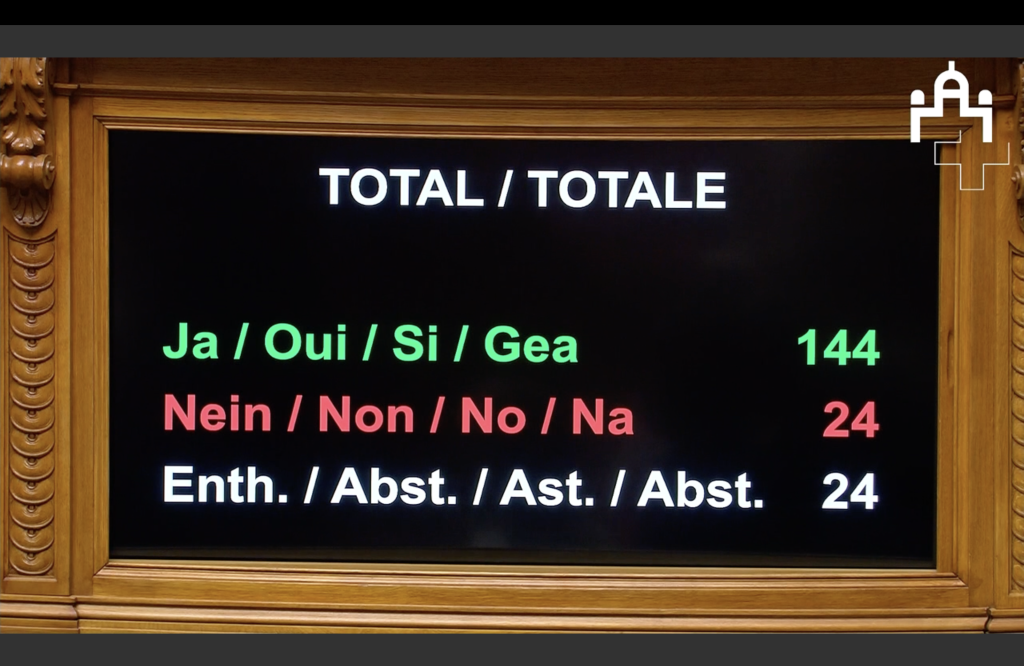
Today the National Council adopted by a large majority the Federal Act on the Use of Electronic Means to Fulfil Government Tasks (EMOTA). CH++ and Opendata.ch have followed the bill from the very beginning and were able to prompt important improvements to the legislative text. It is now up to the Council of States to resolve the differences during this session so that the act can go to the final vote at the end of September.
Openness, collaboration, speed, innovation: CH++ and Opendata.ch have worked towards a solid and forward-looking project and played a decisive part in convincing a majority of parliamentarians that these principles are fundamental to the digitalisation of the Confederation. The act sets out a clear strategic direction: Open Government Data as a binding requirement, mandatory open standards, enabling pilot projects and public-interest digitalisation projects, and publishing open source software are important milestones. “This is real progress, a good day for Switzerland and for all constructive forces in digital civil society,” comments Hannes Gassert, President of CH++ and co-founder of Opendata.ch. “However, we regret that personal and company data are excluded across the board from the ‘open by default’ principle, even though some of them generate great social, economic and scientific benefits. We will keep working on that,” he adds. We call for government data to be made publicly and freely available by default, with the sole exceptions of particularly sensitive personal data (data protection), confidentiality obligations and information security.
An important challenge remains, however: the digitalisation of the other federal levels. Both organisations now see the Confederation and the intercantonal conferences as obliged to achieve concrete progress here as quickly as possible.
The Federal Administration is not a “digital native” – and the new act will not make it one overnight either. But it is a big step towards a public sector in which digital progress is no longer a tiresome side issue, but a central, binding task with clear principles. It is now up to the Council of States to resolve the differences in line with the National Council’s version during this session.