Energy and Climate Hack
- Hackathon

The Energy & Climate Hack took place on 31 August and 1 September 2021 – as part of the «Decarbonising Cities» conference of Swisspower and the British Embassy, in the run-up to the COP26 climate conference in Glasgow. After two postponements due to the pandemic it was held online so that the guests from the United Kingdom could stay on board, broadcast from Swisspower’s offices in Bern. Around 40 participants from Switzerland and the UK worked for 36 hours on Zoom, Wonder.me and Slack.
Six of nine challenges – posed by federal offices, Empa, the University of Bern, OST, FHNW and companies – were taken up. The results include a data model for the NEST research building, the app «Wärmcity Bern» on the city’s heat islands, a site analysis for vertical farms, statistical models of what drives solar, e-mobility and renewable heating in municipalities, a governance for financing photovoltaics through a blockchain, and the app «Cool urban spaces».
Before the final presentations, Anita Stalder of Energie Wasser Bern spoke about innovation at the city utility and Till Richter of aliunid about real-time electricity data. Both sessions were streamed live on YouTube; four challenges were pursued after the event.
Photos
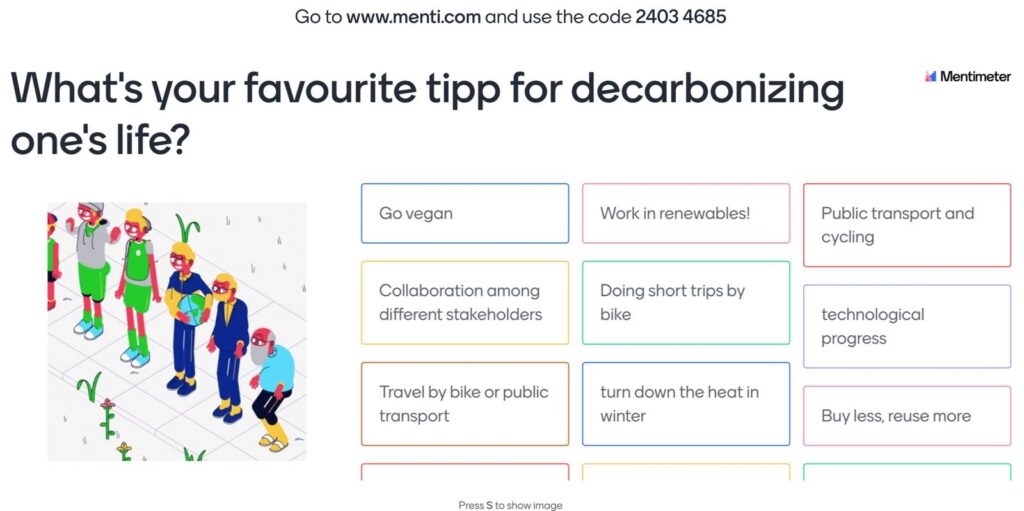

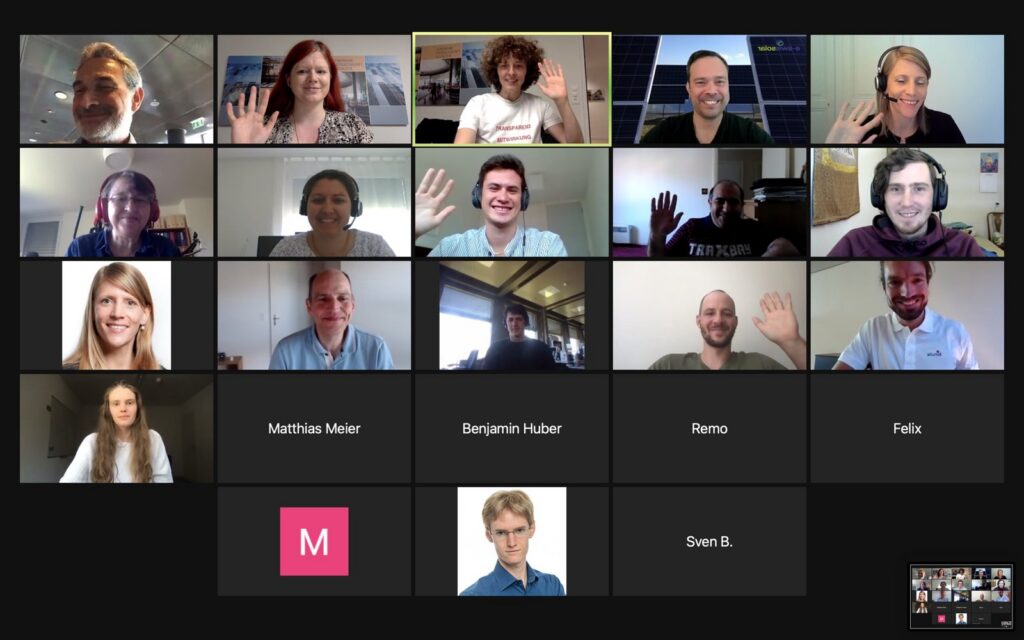
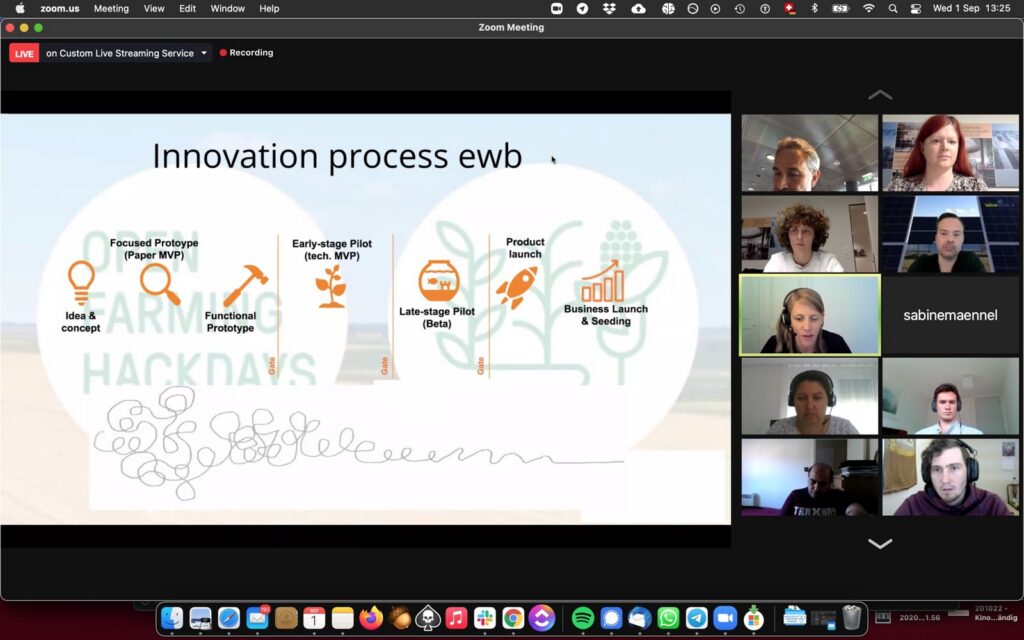
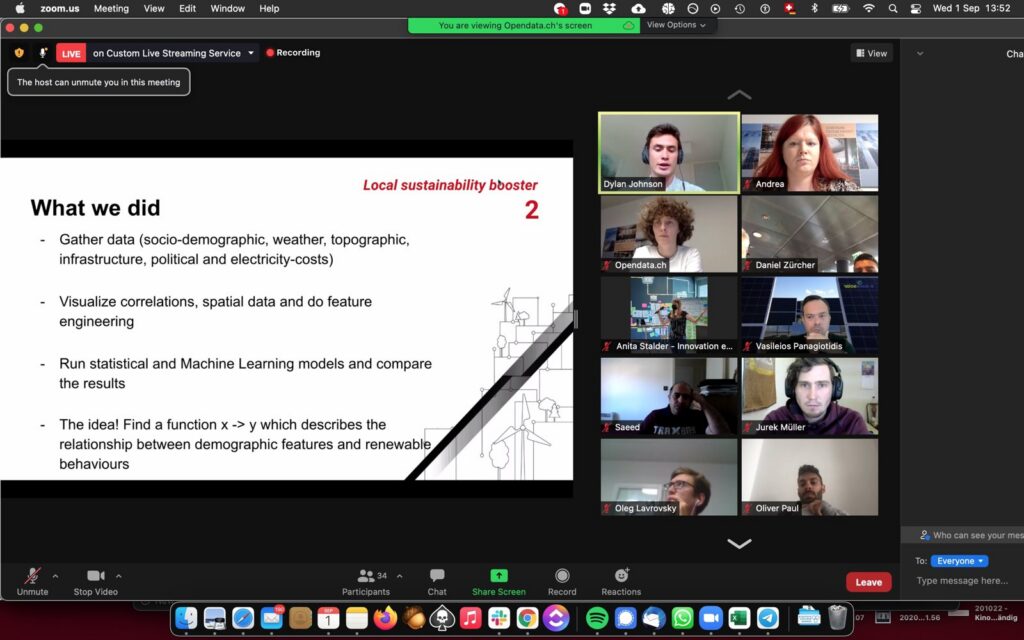
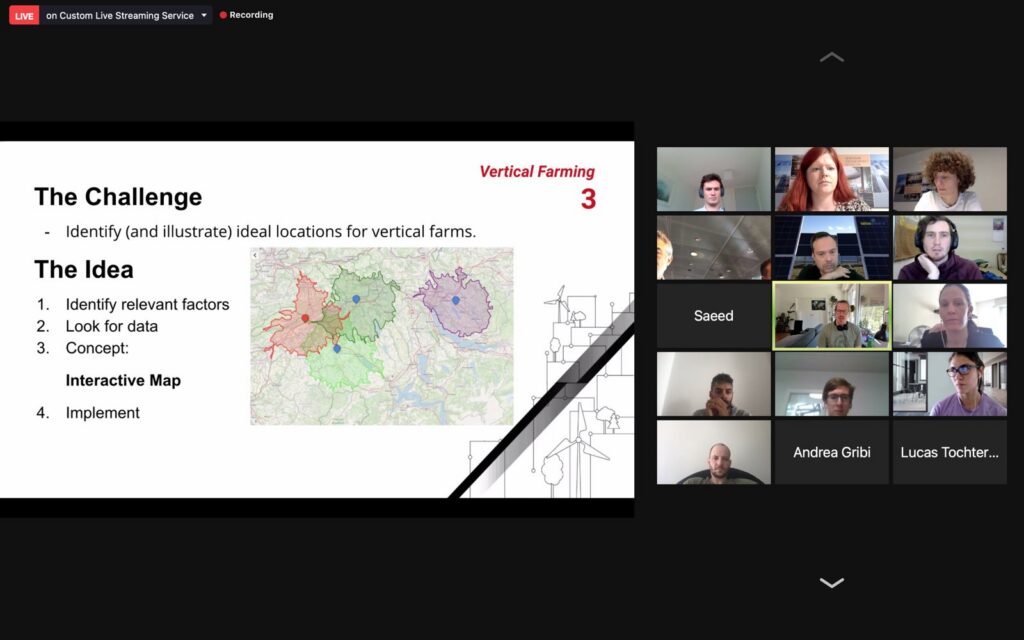
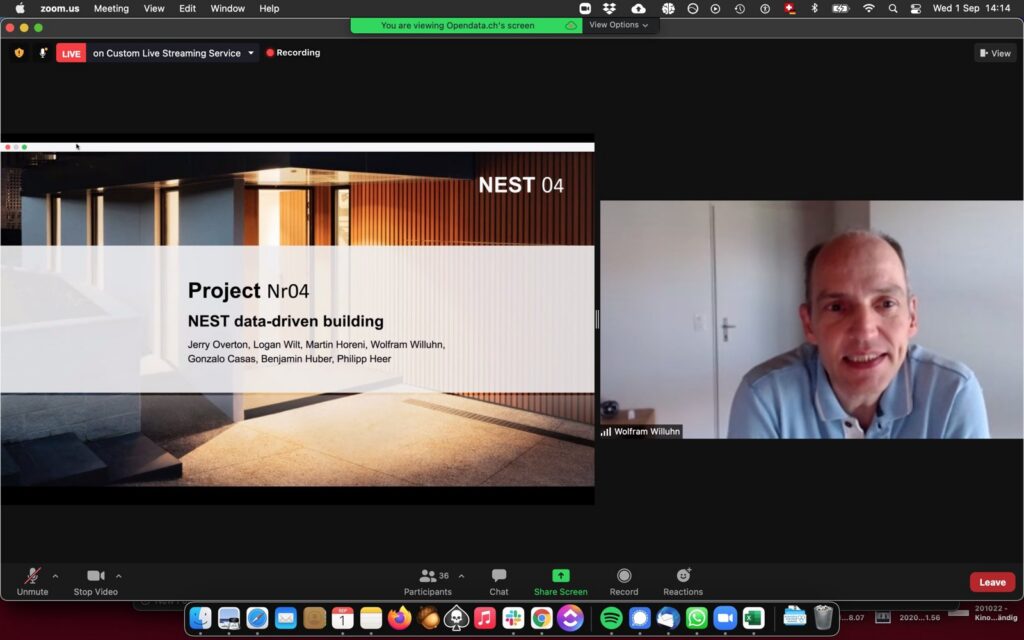
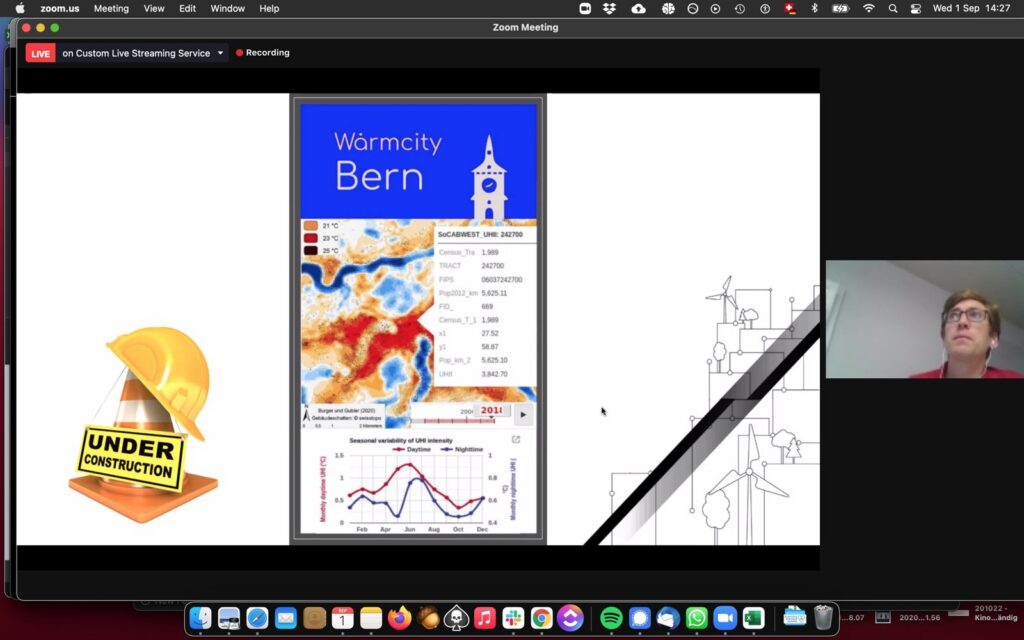
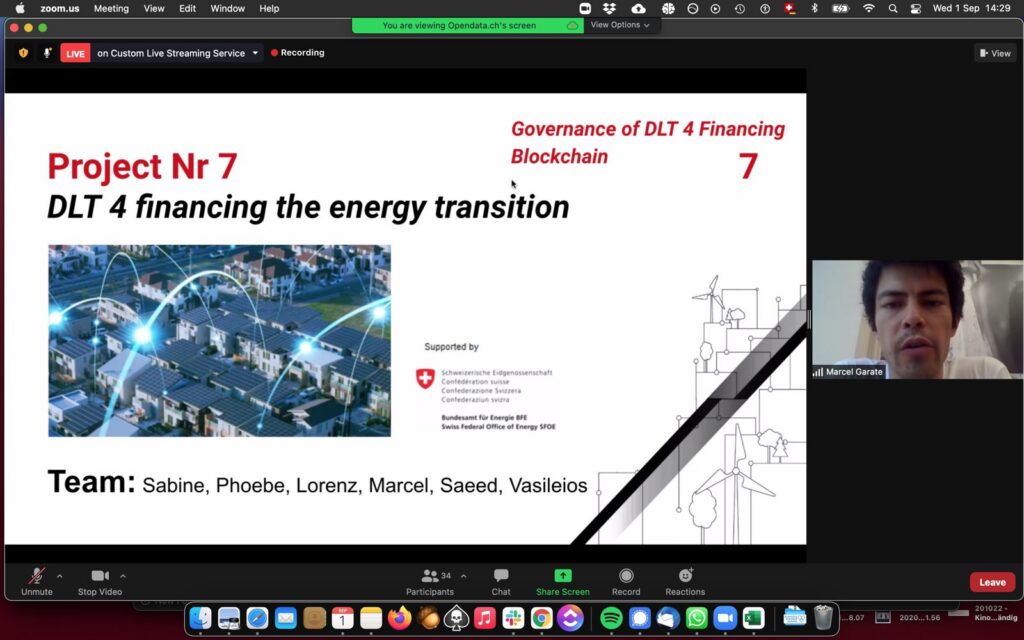
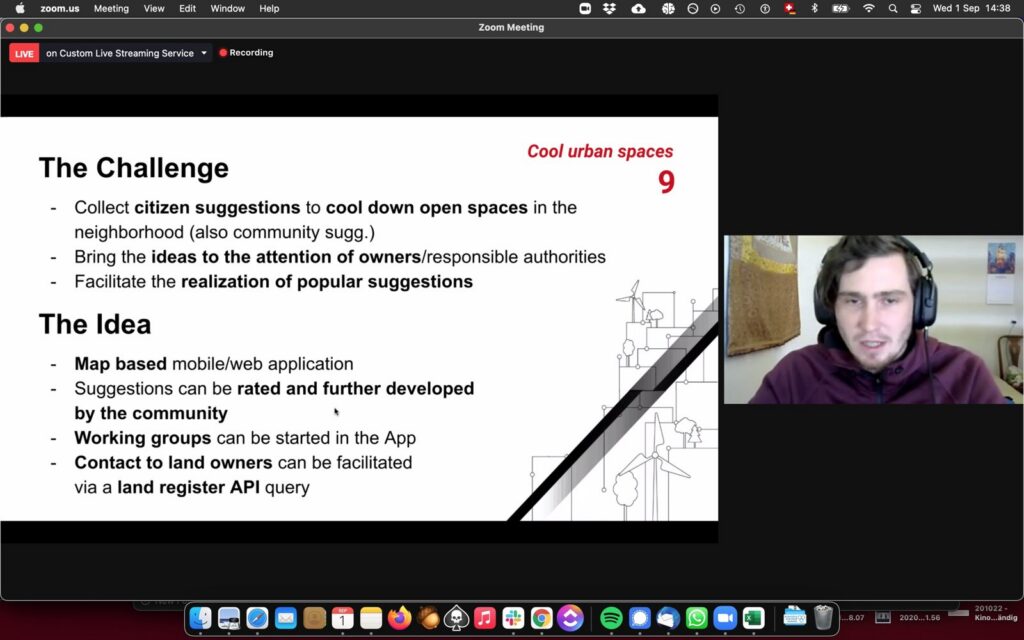
Photo: Opendata.ch (Bildschirmfoto)
Documentation and recordings
- Energy & Climate Hack – The Results – Live Broadcast (OpendataCH)
- #hackdaysreport: «Local Sustainability Booster» & 5 weitere Projekte vom Energy & Climate Hack (opendata.ch, 2.11.2021)
- Challenges und Ergebnisse auf hack.opendata.ch (Event 36)
- Energy & Climate Hack 2021 – Folien zur Eröffnung und zu den neun Challenges
- Energy & Climate Hack 2021 – Inputs von ewb und aliunid und die Schlusspräsentationen
Challenges
- EcoBooster Innovation Tool – Fachhochschule Nordwestschweiz, Bundesamt für Umwelt (BAFU)
Ein gamifiziertes Ideenmanagement für Unternehmen und Verwaltungen weiterentwickeln: mehrere Standorte, UX-Design, ein Punkte- und Rangsystem.
- Local Sustainability Booster – Bundesamt für Energie (BFE)
Welche Faktoren treiben Photovoltaik, Elektromobilität und erneuerbare Wärme in den Gemeinden? Mit den Daten des Energiereporters.
→ Result: Local Sustainability Booster
- Vertical Farming – YASAI AG
Wie gross ist das Potenzial von Vertical Farms für eine dekarbonisierte Stadt, und wo stehen sie am besten?
→ Result: Vertical Farms
- NEST, a Data-driven Building Model – Empa
Mit den Messdaten der rund 10’000 Sensoren im NEST der Empa vorhersagen, welche Energiezufuhr zu welchem Raumklima führt.
→ Result: NEST – a Data-driven Building Model
- Solar panel detection – Fachhochschule Nordwestschweiz
Solaranlagen auf Luftbildern von swisstopo mit Deep Learning erkennen – für die Leistung ganzer Städte oder für Dächer mit ungenutztem Potenzial.
- Heat monitoring network Bern – Geographisches Institut der Universität Bern (GIUB)
#MakeOurDaytimeDataGreatAgain: eine Transferfunktion, die den Strahlungsfehler der günstigen Messstationen des Berner Stadtklima-Netzes korrigiert.
→ Result: Wärmcity Bern
- DLT 4 Financing the Energy Transition – e-swissolar AG
Tokenisierung von Energie und Bruchteilseigentum an digitalen Vermögenswerten, um Photovoltaik-Projekte zu finanzieren.
→ Result: Governance of DLT 4 Financing Blockchain
- Load Shifting to incentivize renewable Energy – aliunid AG
Eine robuste Kennzahl, nach der sich Lasten wie das Laden von Elektroautos verschieben lassen, um erneuerbare Produktion zu fördern.
- Cool Urban Locations (for a hot future) – IFS Institut für Software (OST)
Öffentliche und private Freiräume per Crowdsourcing bewerten und Vorschläge für Schatten, Bäume und Wasser sammeln.
→ Result: Cool urban spaces









Programme
Tuesday, 31 August
- 09:00
- –10:20
- 10:30
Wonder.me / SlackForming teams on Wonder.me, then hacking
- 17:45
- 18:15
Wonder.me / SlackHacking (open end)
Wednesday, 1 September
-
Online (Zoom)Good morning: stretching and last hints for the presentations
Five minutes per team plus questions; name the next steps and the resources needed.
- 12:00
Online (Zoom)Deadline for slides and documentation
- 13:15
- 13:45–14:45
- 14:45

Read the original announcement

The British Embassy in Switzerland and Swisspower have come to the decision of postponing the “Decarbonising Cities – Accelerating Change” conference to the September 1st, 2021.
As a consequence, the “Energy & Climate Hack” Hackathon will take place on Tuesday the 31st August and Wednesday the 1st of September 2021.
We really hope that this move will allow us to enjoy a physical or at least an hybrid event.
Decarbonising cities at the Energy & Climate Hack!
Cities are responsible for 70% of the planet’s carbon dioxide emissions and they play a central role when it comes to efforts on global decarbonisation and pushing forward the local energy transition.
In the lead-up to the global climate conference COP26 in Glasgow, a two-day hackathon will bring together young talents, pioneers, innovators and companies from Switzerland and the UK to tackle these important challenges.
The Energy & Climate Hack is part of the Decarbonising Cities conference and will be held entirely in English.
Take part to accelerate the change towards energy-efficient and climate-friendly cities!
Organising team
 Maud ChâteletOpendata.ch – Projektleitung und Moderation
 Andrea AllemannOpendata.ch – Organisation und Moderation
 Oleg LavrovskyOpendata.ch – Hackathon-Plattform und Daten
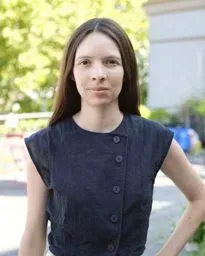 Nikki BöhlerOpendata.ch – Geschäftsführerin


