
GovTech Hackathon
- Hackathon
- Public Sector

23–24 mars 2023, 08:00 @ Bundesamt für Informatik und Telekommunikation (BIT), Eichenweg 3, 3052 Zollikofen
Organisé par Opendata.ch, Chancellerie fédérale (ChF)
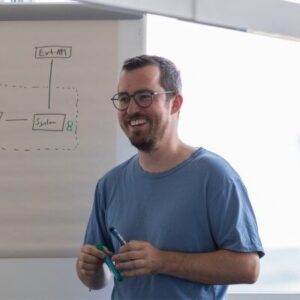
Le premier GovTech Hackathon s’est tenu les 23 et 24 mars 2023 à l’Office fédéral de l’informatique et de la télécommunication (OFIT) à Zollikofen. Quelque 130 participantes et participants issus de l’administration, de l’économie, de la recherche et de la société civile ont travaillé sur 23 challenges autour des interfaces de programmation (API) de l’administration. La Chancellerie fédérale (secteur TNI) organisait le hackathon, avec le soutien d’Opendata.ch pour les challenges, la plateforme, le mentorat et la communication.
17 équipes ont présenté leur prototype en trois minutes au plus devant un jury composé de Lukas Gresch, Catherine Pugin, Stefan Metzger, Daniel Markwalder, Christian Wasserfallen et Pia Bereuter. Ont été primés « L’ascenseur fonctionne-t-il ? » (Sitios), solution la plus utile ; « Planification efficace des recherches de personnes disparues » (Certaid et le service de géoinformation de l’armée), la plus aboutie ; et le chatbot IA, copilote des collaborateurs du 1er pilier (Caisse fédérale de compensation), idée la plus créative.
Le projet d’ascenseur a débouché sur un projet pilote avec des partenaires, et la caisse de compensation a présenté son chatbot à un programme d’innovation fellowship. Code, présentations et descriptions de toutes les équipes se trouvent sur hack.opendata.ch.
Photos




Photo: Bundeskanzlei
Documentation et enregistrements
- Kurzvideo vom Hackathon (BLW)
- Rückblick der Bundeskanzlei
- Medienmitteilung der Bundeskanzlei (27.3.2023)
- inside-it: Resultate des ersten Schweizer Govtech-Hackathons
- geo.admin.ch: First GovTech Hackathon for the digital transformation of Switzerland
- RUBICON: Rückblick auf den GovTech Hackathon 2023
- Glue: Parliamentary data in one place
- Alle Projekte auf hack.opendata.ch
Défis
- Automatisierte Anreicherung von Metadaten – BFS - Geschäftsstelle für OpenGovernmentData
Verbesserung der Such-Resultate: Metadaten sollen automatisiert angereichert werden, damit geographische/administrative Untereinheiten bei der Suche auf opendata.swiss in den Datasets der föderalen Obereinheiten gefunden werden.
Pascal Hurni Agnes MeyerEric Simon
 Hester Pieters
 Maik RothDirk FurrerJana Stojanovic
 Gianluca Macauda
 Thomas Lo Russo
Description du défi
Eine Userin durchsucht das Portal nach Information zur Gemeinde Affoltern am Albis. Ein Dataset des BFS enthält solche Daten. Da der Suchbegriff in den für die Suche relevanten und indexierten Metadaten nicht vorhanden ist, wird das Dataset jedoch nicht bei der Durchsuche erkannt und folglich nicht in der Trefferliste aufgelistet. Beispiel: Statistik der Schweizer Städte 2022 | https://opendata.swiss/de/dataset/statistik-der-schweizer-staedte-2022/resource/6072effd-df7b-4d81-8192-5576dbeb36aa
- Parlamentsdaten an einem Ort – Basis 06 / Glue
Aus Parlamentsdaten der aller föderalen Ebene mehr machen
Description du défi
Nur wenige Parlamentsdaten sind aktuell sturkturiert als OGD verfügbar. Für Bürger, Organisationen wie auch die Behörden selber ist es schwierig sich einen Überblick über Themenkomplex zu verschaffen, die verschiedene Parlamente und Regierungen betreffen.
- Standard Data Structure for Civic Participation – Octree.ch
Draft specifications to frame Civic Participation data
Description du défi
More and more cities are experimenting civic participation, with open or close-source softwares. The field of civic participation (participatory participation or delibatory participation) is experimented in many swiss cities like Zurich, Lausanne, Bienne, Winterthur or the state of Geneval. In the same time numerous cities and countries around the world publish data about participation: ·new york: https://catalog.data.gov/dataset/participatory-budgeting-projects ·mexico: https://datos.gob.mx/busca/dataset/obras-presupuesto-participativo-de-san-pedro-garza-garcia ·helsinki: https://hri.fi/data/fi/dataset/helsingin-osallistuvan-budjetoinnin-aanestystulokset/resource/f5ed16dd-e5f9-4781-9de3-a3657e49ba41 ·spain: https://opendata-ajuntament.barcelona.cat/data/en/dataset/culturailleure-espaisparticipaciociutadana) ·And many more (didn’t find a Swiss example). The problem with this situation is that: little publish their results in open-data and when they do, it is hard to fill the gap between the datasets. We have so many fantastic technologies, but no one uses a well-documented data shema to export participatory data. It’s time for change
- Dienstleistungen für Ratsmitglieder – Parlamentsdienste
Dienstleistungen für Ratsmitglieder
Description du défi
Entwickle eine technische Applikation, damit jedes Ratsmitglied eine massgeschneiderte, genau passende Antwort auf seine Fragestellung, auf seinen Auftrag und generell zur Unterstützung seiner Arbeit erhält. Dabei müssen zwingend inkludiert werden: die Auftragserteilung für Aufträge und Newsletter, Rückmeldemöglichkeit für Ratsmitglieder, Push-Nachrichten für Abonnemente, und aktive Kommunikation durch die ParlB.
- Wissen, ob der Aufzug funktioniert. – Sitios
Preis der Jury: nutzbringendste Lösung («Funktioniert der Aufzug?»). In diesem Projekt soll die technische und kommerzielle Grundlage für eine Dateninfrastruktur geschaffen werden, die den Betriebszustand öffentlicher Aufzüge verschiedener Anbieter erschließt und harmonisiert. Damit werden Anbieter von Navigations- und Fahrplan- Apps in die Lage versetzt, Informationen über den Betriebszustand von Aufzügen in Bahnhöfen, Verwaltungsgebäuden und anderen öffentlichen Einrichtungen in ihre Dienste zu integrieren. Die Information, ob ein Aufzug gerade funktioniert, ist für alle Personen nützlich, die auf einen Rollstuhl oder Rollator angewiesen sind oder mit schwerem Gepäck oder einem Kinderwagen reisen.
Description du défi
Ob ein Aufzug funktioniert, kann für einen Rollstuhlfahrer, der eine Behörde im dritten Stock besuchen oder am Bahnhof umsteigen will, entscheidend sein. Ein Beispiel: Luca fährt mit dem Zug nach Bern Wankdorf, um seinen Lieblingsclub im Cupfinal zu unterstützen. Auf Gleis 5 angekommen, fährt er mit seinem Rollstuhl zum Lift, der ihn zur Fussgängerüberführung bringen soll. Hier stellt er fest: Der Lift ist wegen Wartungsarbeiten ausser Betrieb. Luca bleibt nichts anderes übrig, als den nächsten Zug nach Biel zu nehmen und sich das Spiel auf dem Handy anzusehen...
- API mobilité - climat – Alliance Climatique Suisse
Disposer des données mobilité pour l'évaluation des politiques climatiques
Description du défi
Avec le projet Climate Ticker, l'Alliance Climatique Suisse et l'Alliance digitale veulent évaluer les politiques climatiques des cantons et communes suisses. Cela permettra ensuite aux citoyen-ne-s concerné-e-s par le climat de mettre en avant des revendications précises. Pour cela nous avons besoin de données, et celles sur la mobilité sont difficiles à trouver. Pouvez-vous nous aider ?
- River mapping and monitoring for people and clean energy – Fluence / Independent
clean energy, water
Description du défi
Switzerland is full of small rivers and streams that amaze for their beauty and amuse the citizen during Summer for swimming or refreshing. Some research shows that even small rivers could in principle help to produce clean energy also in locations where the standard hydro turbines cannot be installed, together with leaving the panorama and the water fauna unharmed (https://www.turbulent.be/ ). In order to help Communities, Communes and people to assess the feasibility of these projects, a precise mapping and monitoring of the river position, height, flow and jumps is necessary. Creating an API containing all of these information, together with their seasonality and the quality of the water will provide the basis for a visual representation for these and other goals. The existing projects (e.g. Digitaler Wassernetz der Schweiz) have gathered data but the availability of this information is low.
- Entsorgungsdaten vereinheitlichen – Statistik Stadt Zürich / Open Data Zürich
Entsorgungsdaten (Termine, Abfallstationen) vereinheitlichen und als API anbieten
Description du défi
Ich habe bereits ein solches API (OpenERZ) und möchte gerne die Entsorgungsdaten von möglichst vielen weiteren Gemeinden erschliessen. Diese sind zum Teil in PDFs, Excellisten oder Kalenderdateien.
- Übersicht Gesamtmobiliät Schweiz – BAV Bundesamt für Verkehr
Gesamtmobilität der Schweiz
Description du défi
Der Grad der Erschliessung ist für die Schweiz für den öV gut bekannt. Für andere Mobilitätsangebote (z.B. Sharing, On-Demand, Taxi) fehlt diese Information resp. ist nur teilweise vorhanden. Es gibt keine Gesamtübersicht der Mobilitätsangebote zu einer bestimmten Zeit an einem bestimmten Ort. Insbesondere in ländlichen Gebieten zu Randzeiten haben Reisende nur unzulängliche Informationen, wie und wann sie an- und abreisen können. Unternehmen haben nur beschränkte Planungsgrundlagen für die Mitarbeitermobilität.
- Living Topics: Show the pulse of what the Swiss Government is working on, by combining up-to-date terminology databases with texts published by the Government. – BK Federal Chancellery
Words, phrases, and terms in a governmental context have one special feature: As they often relate to legal concepts and are the base of far-reaching decisions, standing terms (also called “named entities” in computer science) need to be well defined, often by a legal base. To be able to work with this domain-specific vocabularies, these standing terms are organized in terminology databases and can be accessed through TermDat (BkTermdatUi ). The goal of this challenge is to harness the expressivity and freshness of the terminologies provided by TermDat to create a high-quality map of what topics the Swiss Government is currently working on.
Description du défi
The Swiss Confederation currently has almost 40k employees (~36k full time equivalents). It is not only difficult for the citizens of Switzerland to grasp the breadth and depth of which topics are worked on, the same is valid for the employees within the Swiss Confederation. Therefore, it is important to have a good high-quality overview of the ongoing work and the change of focus in regard of ongoing themes globally. Conversely, the specialists working on the terminology database are not able to read all new texts being published every day and would welcome a tool which would allow them to harvest newly coined terms or terms being used in a new context or with a different translation. Finally, end-users of texts might want to be able to click on a given (technical) word and receive a definition of that word.
- Enabling Energy Data for Applications – BFE Bundesamt für Energie
Energie
 Lucas Tochtermann
 Martin Hertach
 Phuong DasenRoby Radica
 Daniele Scopece
 Corinne StraubHelmut Recher
 Peter Janes
Description du défi
Das BFE hat rund 100 OGD Produkte und erst kürzlich ein Energie-Dashboard veröffentlicht mit Energiedaten von hohem öffentlichen Interesse. Wie kann das BFE Energiedaten nützlicher und zugänglicher für Anwendungen machen, um die digitale Innovation zu fördern?
- Echtzeit Elektrofahrzeug-Ladestationen Überwachung Dashboard – BFE Bundesamt für Energie / swisstopo
Das Ziel dieser Challenge ist es, ein Dashboard zur Überwachung des Stromverbrauchs und Konsums bei Elektrofahrzeug-Ladestationen in der Schweiz zu entwickeln. Die Überwachung soll in Echtzeit erfolgen, um eine effiziente und effektive Verwendung der Ladestationen zu gewährleisten und Die Energienutzung in einer Strommangellage zu monitoren
Description du défi
Stromnetzbetrieber, Behörden und Stromanbieter benötigen eine einfache Möglichkeit, den Stromverbrauch und Konsum E- Fahrzeuge bei Ladestationen zu überwachen. Eine Überwachung in Echtzeit ermöglicht es ihnen, Netzauslastung effizienter zu planen und so mögliche Mangellagen zu vermeiden.
- Reduce to the max: Txt2Key – BFS I14Y.ch
Ein Schlüsselwort-Generator für Datenkataloge
Description du défi
Keywords sind wichtig. Ohne sie gehen Inhalte in der Informationsflut des Internets unter. Am sinnvollsten ist es, wenn die passenden Schlüsselworte aus einer umfangreichen, aber vordefinierten Liste gewählt werden. Die treffenden Schlüsselworte zu finden, ist aber umständlich und zeitaufwändig. Bislang. Denn nun gibts Txt2Key, einen effizienten Keyword-Generator. Txt2Key ist eine einfache API. Wird eine Beschreibung an die technische Schnittstelle geschickt, liefert sie eine Liste von Keywords zurück. Somit lässt sich Txt2Key an bestehende Datenkataloge anbinden, etwa an I14y.ch, Opendata.swiss oder Geocat.ch.
- Use AI for the evaluation of consultation procedures – BK Federal Chancellery
New language models (text generators) such as ChatGTP are making headlines because they are apparently "creative", i.e. they produce "new" content. This is - as Eduard Kaeser put it in the NZZ recently - a "misunderstanding" (link below, point 4). However, language models such as ChatGPT can search through quantities of text and, on the basis of certain algorithms, deduce sequences of words from them, which we humans can then recognise as a "meaningful" summary of these texts. One example of such a use case is described below (see link 4): An urban planner, Rick Jacobus, used ChatGPT to evaluate feedback in the context of a public consultation on a spatial planning project. Could language models such as ChatGPT therefore be used, for example, for the (complex) evaluation of responses from cantons, political parties and interested groups to the formal consultation procedures which are an integral and important part of the policy cycle at all levels of Government in Switzerland?
Description du défi
Draft laws or amendments to laws as well as important ordinances have, by law, to be submitted to a consultation: All important stakeholders are asked to comment on the (political) desirability and (practical) feasibility of a proposal. As a rule, dozens of responses are received: From the cantons, political parties, municipalities, cities, business associations, trade unions, environmental organisations, but also from individual citizens. The feedback can vary greatly in terms of form and scope. These comments must be "acknowledged, considered and evaluated" and the result of the consultation "summarised in a report" (according to Art. 8 of the Consultation Procedure Act CPA). The consultation documents, the opinions and the report on the results are publicly accessible (Art. 9 of the CPA). The beneficiaries of an AI-supported evaluation of the consultation responses would primarily be the administrations: Only at the federal level, more than a hundred consultations have to be evaluated each year. However, it is probable that such a tool would also be of interest to parties and civil society, provided that the toolchain were made publicly available, in the sense of "open source”. It would make it possible to independently evaluate the reports established by the administration with the help of machines and thus independently verify the assumptions made in the evaluation by the administrations and its conclusions. Such an independent review is currently difficult to do, due to the ressources needed to sift through the large volume of usually unstructured responses (scan PDFs).
- agricultural live data collector (aldc) – BLW
Build a mobile app to simplify the life of a farmer by collecting automatically farming data and providing it to surrounding systems using standardized API’s.
Gerhard FurrerPhilipp Egli András Mészáros
 Ebu DemirhanPaulius Kelevisius
 Constantin Streit
 Alexandros Coutsicos
Description du défi
Today farmers have to write data using a GUI. That’s time consuming. The so called «administrative Vereinfachung» is a big wish of the farmers and an aim of the administration. Even more data is needed by new systems like «digiFlux» . This app may feed them.
- Erstellen eines Modells in GPT-3 zur Beantwortung von Fragen über die EAK-Website Inhalte – EAK Eidgenössische Ausgleichskasse, Bern
Preis der Jury: kreativste Idee («AI-Chatbot, als Co-Pilot für die Mitarbeitenden der 1. Säule»). Das Experimentieren mit natürlicher Sprache für API-Queries ermöglicht es uns, synthetischen Inhalt via OpenAI zu erstellen, der schliesslich zum Trainieren des eigenen davinci-Models verwendet werden kann.
 Mario Bee
 Simon Rüfenacht
 Damian Wasmer
 Patrick Arnecke
 Gian Valentin Derungs
 Elias MedawarThomas Lo Russo
Description du défi
Der Bedarf besteht darin, ein Sprach-Modell zu erstellen, das Anfragen über die Inhalte der EAK-Website beantworten kann. Für interne Zwecke.
- Parking API – Etat de Fribourg
Toutes les solutions de gestion de parking peuvent être interfacées avec les solutions eGov des cantons
Description du défi
Simplifier la vie de la population. Une solution de unique de gestion de la problématique de parking (au travers d’iGovPortal ou autre) au travers d’une API standard vers toutes les solutions de gestion de parking utilisées en suisse
- Gebühren für Wasser, Abwasser und Abfall gehen open – PUE Preisüberwachung
Offene Daten der Preisüberwachung
Agnes MeyerfrundDescription du défi
Der Preisüberwacher (PUE) möchte die Digitalisierung nutzen, um seine Zusammenarbeit mit den Gemeinden effizienter zu gestalten und ihnen darüber hinaus einen Mehrwehrt zu bieten. Ein erster Schritt soll ein Open-Data Self-Service hinsichtlich der Gebührenänderungen für Wasser, Abwasser und Abfall sein.
- Harvest ad-hoc data for crisis mitigation – Schweizer Armee - Geoinformationsdienst Verteidigung
Preis der Jury: am weitesten entwickelt, zusammen mit der Challenge von Certaid als «Effektive Einsatzplanung für Vermisstensuche» (https://hack.opendata.ch/project/980). Goal of the challenge is to create a geo-spatial representation for crisis mitigation with relevant data dependent on the incident. If there is e.g. an incident related to power-shortage we would like to know and see and access all the available relevant data that relates to the issue (power-plants, utilities, shortages, …). The data might come in from text-base, geo-spatial or also news-feed and social media sources or publications on the internet by energy-companies and providers etc. As a first step the challenge should come up with a strategy and a scenario how to find and identify and classify OSINT sources and finally implement a POC to show how the data can be accessed and integrated. There is also an option to derive secondary data from primary sources. As an example: via image processing extract relevant infrastructure from image-based data (satellite images etc.) and geocode it.
Description du défi
In order to get a most actual situation report near-realtime data needs to be harvested ad-hoc and integrated into a basic mapping infrastructure. The problem is to identify both relevant and accessible and reliable sources of information. Emergency agencies and organisations need such information to manage their resources and be able to make tactical decisions.
- Lagebild und Journalführung - über Organisationen hinweg – Certaid Genossenschaft (www.certaid.ch)
Preis der Jury: am weitesten entwickelt, zusammen mit der Challenge von Geoinformationsdienst Verteidigung als «Effektive Einsatzplanung für Vermisstensuche» (https://hack.opendata.ch/project/980). Freiwilligenhilfe in der Schweiz
 Hans-Jörg Stark
 Roswitha Eichberger
 Angelika HaiderLilien BachmannMirjam Thomet
 Michele Bolla
 Arnaud van MesdagPavlina Mendlova
Description du défi
Um den Einsatz von Freiwilligen möglichst gut gestalten zu können, brauchen wir einen Standard für die Erstellung eines Lagebilds und die Journalführung. Die standardisierte Lösung kann von allen Hilfsorganisationen mit Freiwilligen und auch von Blaulichtorganisationen verwendet werden um das Potenzial von Hilfskräften zu optimieren. Als Beispiele hier Unterstützung bei Naturkatastrophen, bei der Flüchtlingshilfe oder auch bei der Pandemie.
- Hack your city: wie man den öffentlichen Raum und das Internet miteinander verbindet – Smart City Hub Switzerland
Internet of places, Information und Partizipation im öffentlichen Raum
Description du défi
Auf der einen Seite der öffentliche Raum: Er wird täglich von der Bevölkerung geteilt und ist voll von Sehenswürdigkeiten, Orten, die es zu erkunden und Events, die es zu entdecken gilt, Auf der anderen Seite das Internet: Es bietet unendlich viel Wissen, informiert und lässt die Menschen am öffentlichen Leben teilhaben. QR-Codes ermöglichen es mittels Smartphone, diese beiden Welten einfach und effizient miteinander zu verbinden, "Hack your city" sollen jedem die Möglichkeit bieten, mit seiner Umgebung zu interagieren, um Orte und Daten zu verbinden.
- Verbesserung Online-Zugang für das Bundesarchiv – BAR Schweizerisches Bundesarchiv
User-Interface, Data-Analytics, Data-Visualization, Linked-Data
Description du défi
Das Bundesarchiv hat mehrere Millionen Dokumente. Der Onlinezugang ist das wichtigste Tool um diese zu finden. Es wird sowohl intern wie extern verwendet. Weil es alle verwenden und es viel zu viele Dokumente sind, ist es das Herzstück des BARs.
- Biodiversity - hUmans are not alone – IBM Switzerland
Combine data sources to visualize and improve the status quo of biodiversity
Description du défi
The unsustainable way in which we are currently using land is contributing to the loss of biodiversity. We need to reconcile the economic well-being of people and ensure the survival or diverse flora and fauna for the survival of our planet. How can we use environmental data to make agriculture and land use more sustainable? How can we use digital tools to support biodiversity? How can digital technologies help to modernise biodiversity protection measures? Giving back more to the planet than we take away is central to our common long-term well-being and prosperity.






























Programme
Jeudi 23 mars
- 08:00–09:00
EingangCheck-in, café et croissants
- 09:00–09:30
- 09:30–11:00
Conference HallPrésentation des challenges
- 11:00–11:30
4. StockFormation des équipes
- 11:30–13:00
Restaurant BIT (Eichenweg 1)Déjeuner
- 13:30–17:45
4. StockHacking
- 15:00
- 17:45
Conference HallCheck-out
- 18:00
Restaurant GinkoApéro, puis hacking sans fin



Vendredi 24 mars
- 07:30
4. StockCheck-in, café et croissants, hacking
- 10:00
- 11:30–13:00
Restaurant GinkoDéjeuner
- 16:00–17:15
Conference HallPrésentations des équipes
17 équipes, trois minutes au maximum chacune.
-
14 · Living Topics
Challenge de der Bundeskanzlei.
- 17:15
Restaurant GinkoApéro
- 17:45
Restaurant GinkoDécision du jury et remise des prix
trois prix : idée la plus créative, solution la plus utile, la plus aboutie





Lire l’annonce d’origine
Au GovTech Hackathon, nous construisons, améliorons et utilisons ensemble des API des autorités. Rencontre des développeuses et développeurs, des expert·e·s et des passionné·e·s de l’administration, de l’économie et de la société civile, et travaille avec eux sur les fondations numériques de notre société.

La GovTech vise à simplifier les processus dans toutes sortes de domaines. Les entreprises devraient pouvoir traiter automatiquement leurs factures TVA. La société civile peut suivre en temps réel ce qui se passe au Parlement. Les maîtres d’ouvrage devraient pouvoir déposer leurs demandes de permis de construire par voie électronique et en suivre l’état en ligne. Les 23 et 24 mars, des utilisatrices et utilisateurs ainsi que des développeuses et développeurs d’interfaces de programmation de l’administration se réuniront à Berne. Pendant ces deux jours, les participant·e·s développeront des prototypes de nouvelles API, amélioreront celles qui existent et concevront des applications qui les utilisent. En bref, ils contribueront à poser les fondations numériques de notre société : les interfaces électroniques, ou API (Application Programming Interfaces), constituent la base des prestations numériques des autorités. Grâce à elles, les entreprises, la population, mais aussi les autorités elles-mêmes peuvent échanger des données et des services et développer leurs propres applications numériques.
Au GovTech Hackathon, les participant·e·s travailleront ensemble pendant deux jours sur des challenges concrets, avec l’objectif de rendre les prestations numériques des autorités aussi conviviales, intuitives, interopérables et durables que possible. Le hackathon est complet. Abonne-toi à notre newsletter pour être informé·e d’une éventuelle prochaine édition.
Challenges et idées
Mobilité. Inclusion. Climat : découvre les challenges autour des API des autorités qui seront présentés et relevés pendant le hackathon :
Programme et informations complémentaires
Le hackathon commence le jeu. 23.03 à 09h00 et dure jusqu’au ven. 24.03, vers 18h00. Il sera animé en allemand (et en français). La plupart du temps, les participant·e·s travailleront dans leurs équipes respectives, où ils peuvent choisir la langue (p. ex. l’anglais). Les repas sont fournis pendant le hackathon. Les frais d’hébergement ne sont pas pris en charge.

Le GovTech Hackathon aura lieu à l’Office fédéral de l’informatique et de la télécommunication (OFIT). Image : Nulleins
Le hackathon est organisé par le secteur Transformation numérique et gouvernance de l’informatique (TNI) de la Chancellerie fédérale avec le soutien d’Opendata.ch.
Contact : govtech@opendata.ch
Équipe d’organisation
 Jürg WüstBundeskanzlei, Bereich DTI
 Florin HaslerOpendata.ch
 Oleg LavrovskyOpendata.ch: Hackathon-Plattform
 Juan Pablo LovatoOpendata.ch: Mentoring
