Open Tourism Hackdays
- Hackathon
29–30 novembre 2019, 09:00 @ Laboratorium Luzern, Sternmattstrasse 3, 6005 Luzern
Organisé par Opendata.ch, Haute École de Lucerne
Les 29 et 30 novembre 2019 a eu lieu au Laboratorium de Lucerne la première édition des Open Data Hackdays, «Episode 01: Tourism». Elle a été organisée par des étudiant·e·s du master Applied Information and Data Science de la Haute école de Lucerne, sous la direction de Tanja Schär, avec Opendata.ch à leurs côtés et le projet Innotour Tourist Office Lab comme partenaire, qui a apporté les questions des offices du tourisme. La Ville de Lucerne a soutenu l’événement.
Environ 90 data scientists, développeurs, designers et professionnel·le·s du tourisme ont choisi dix des 21 challenges et disposaient d’environ 30 heures. Onze résultats sont nés: un guide de voyage individuel pour Thurgau Tourisme («Thur-Guide»), des prévisions des demandes aux offices du tourisme d’Arosa et de Lenzerheide, un algorithme qui trie les e-mails du service aux hôtes d’Engadin St. Moritz, un tableau de bord pour contrôler la taxe de séjour à Heidiland, un concept de tableau de bord pour GastroSuisse, des idées pour la Guest Card Lucerne, une analyse du WiFi public de la ville, des extrapolations de comptages de piétons, une configuration de tag manager pour VisitLovers, ainsi que les fontaines de Nidwald et le WC-Guide sur Wikidata et OpenStreetMap.
Le samedi après-midi, Martin Barth, du World Tourism Forum Lucerne, a parlé de la collaboration entre secteurs, puis les équipes ont présenté devant plus d’une centaine d’invités. La première épisode est devenue une série: les Shape my City Hackdays 2020 et les Tourism Hackdays 2021 ont suivi.
Photos
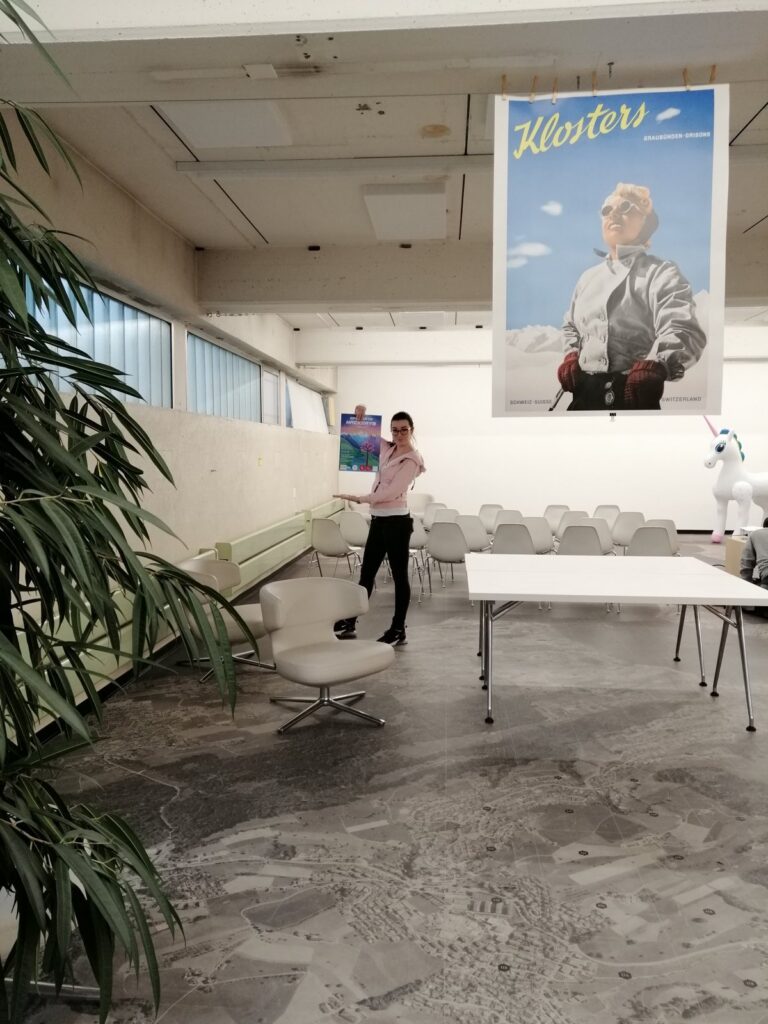
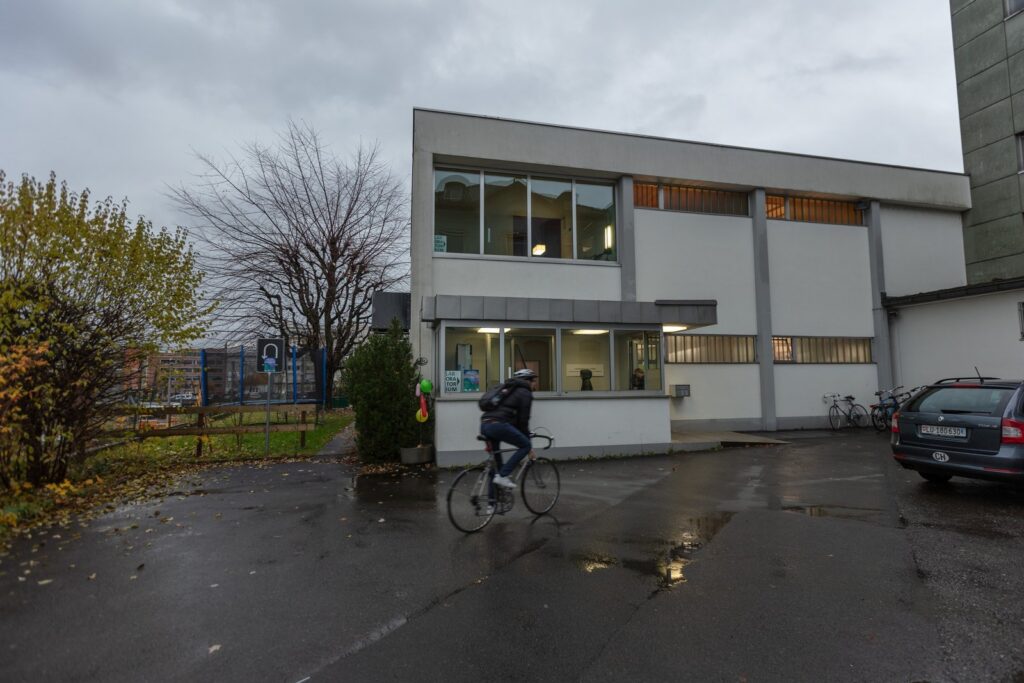
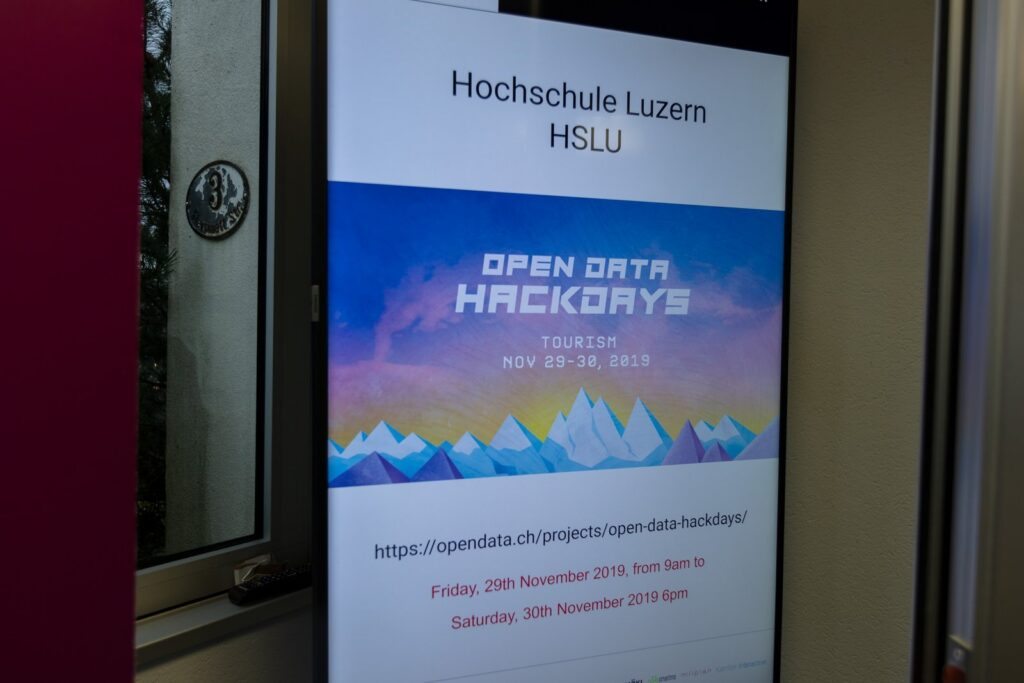
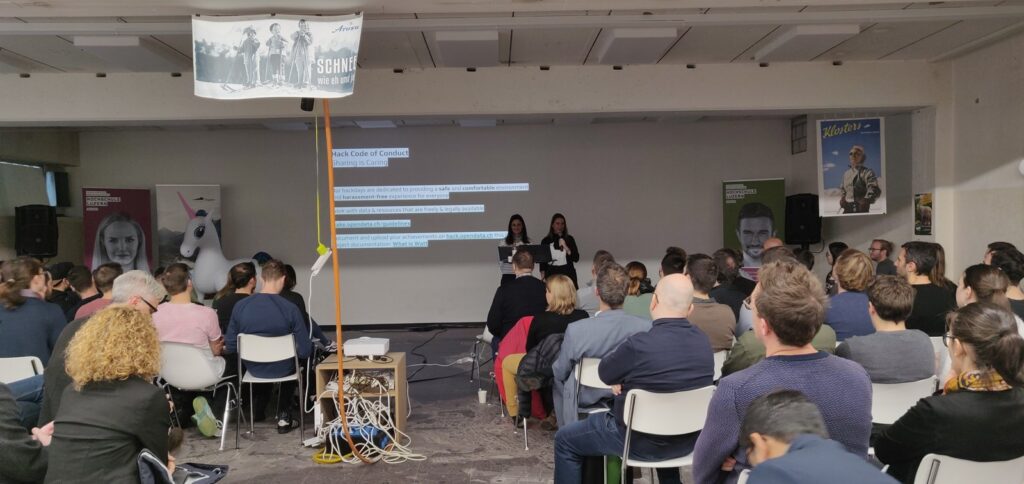
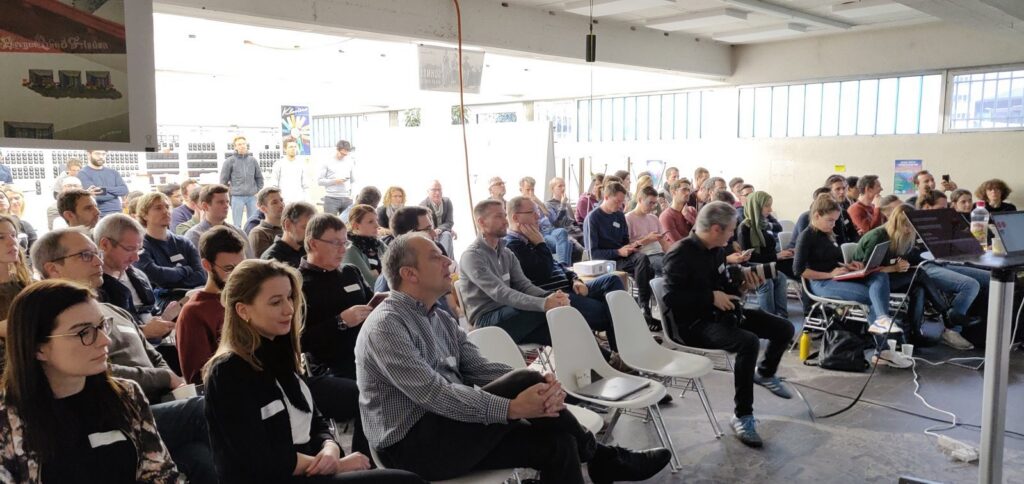
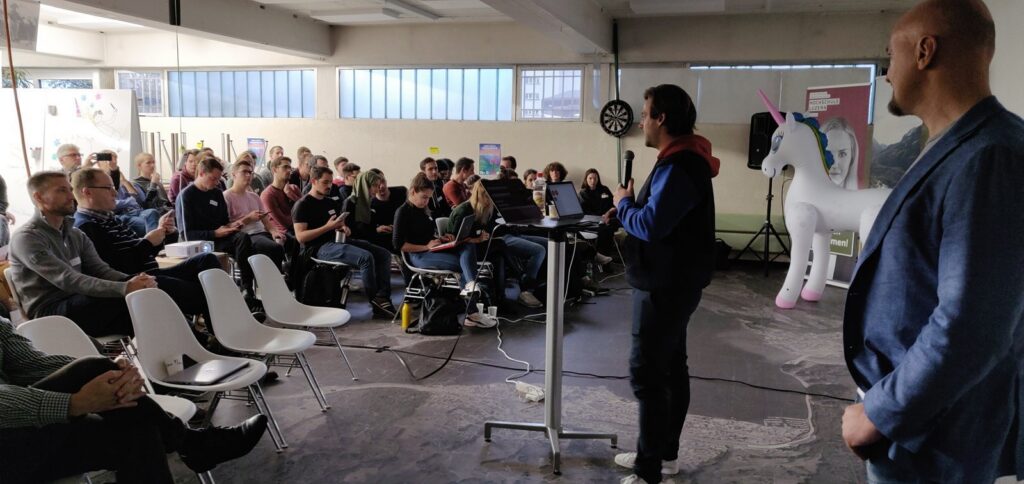
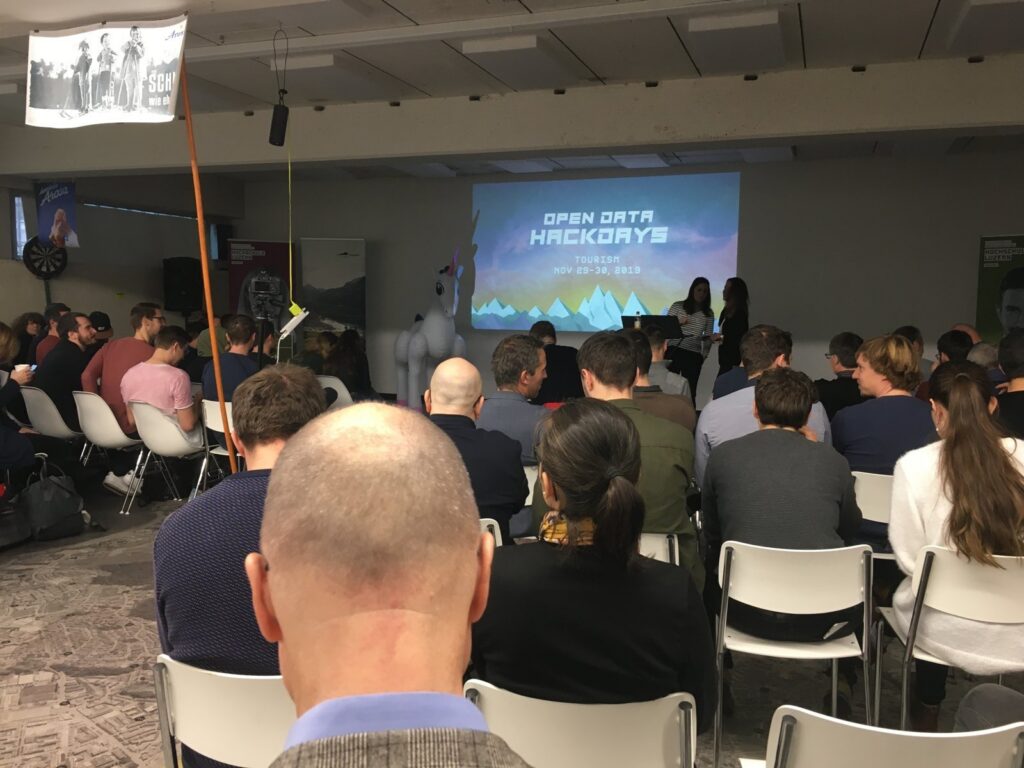
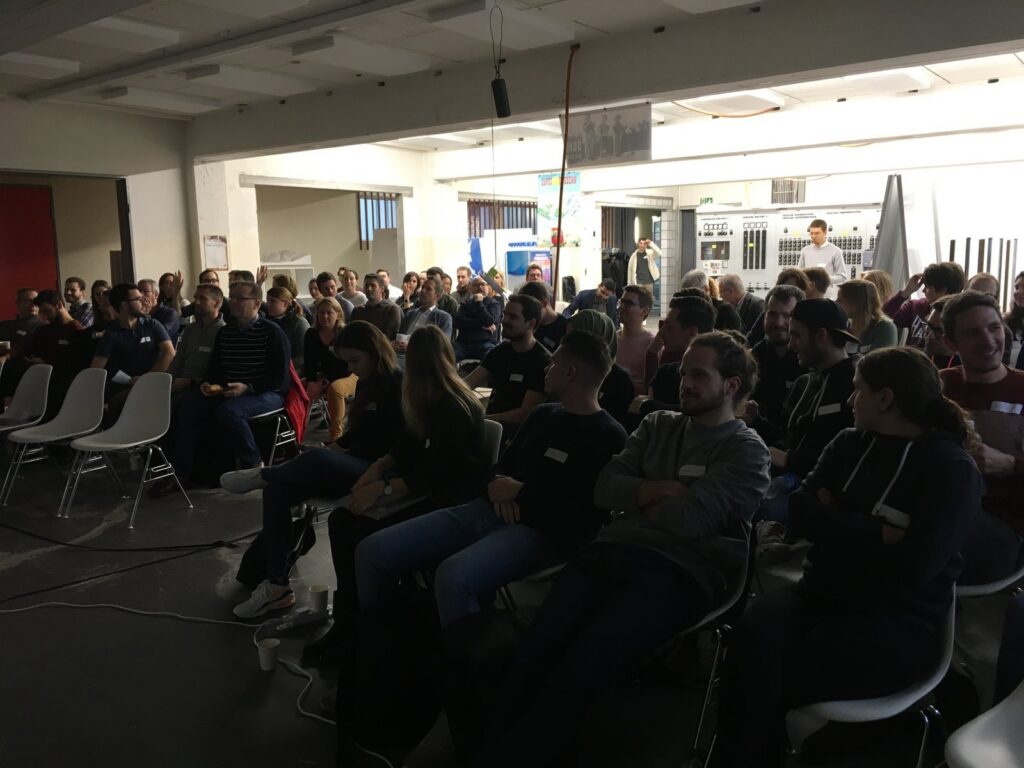
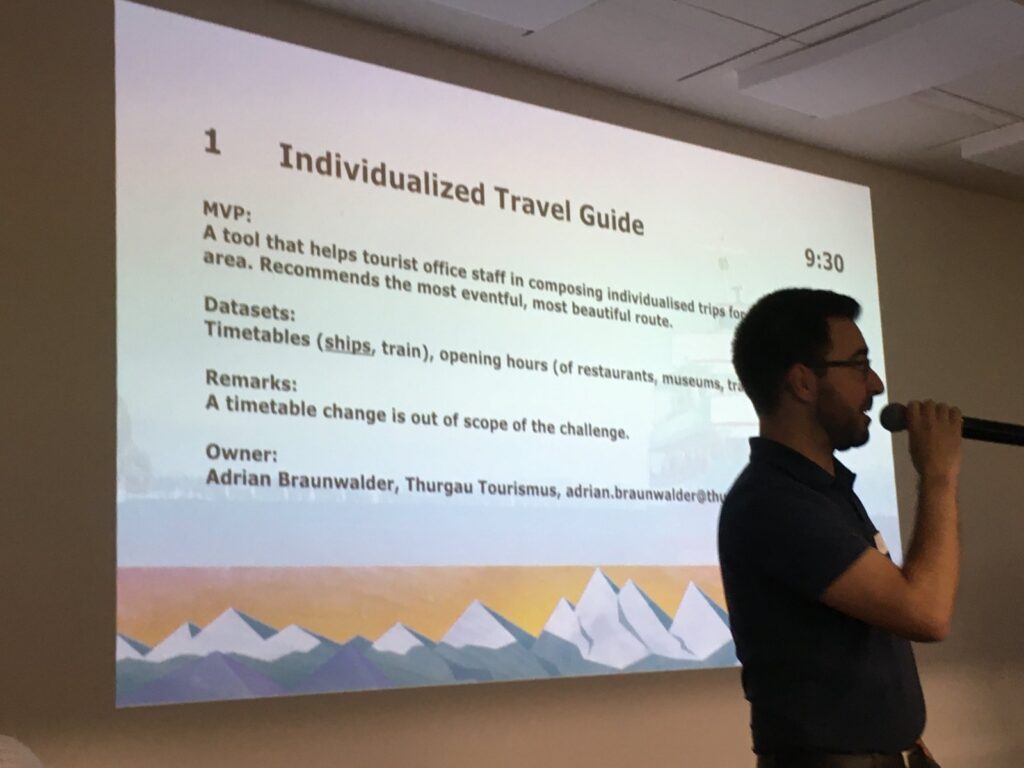
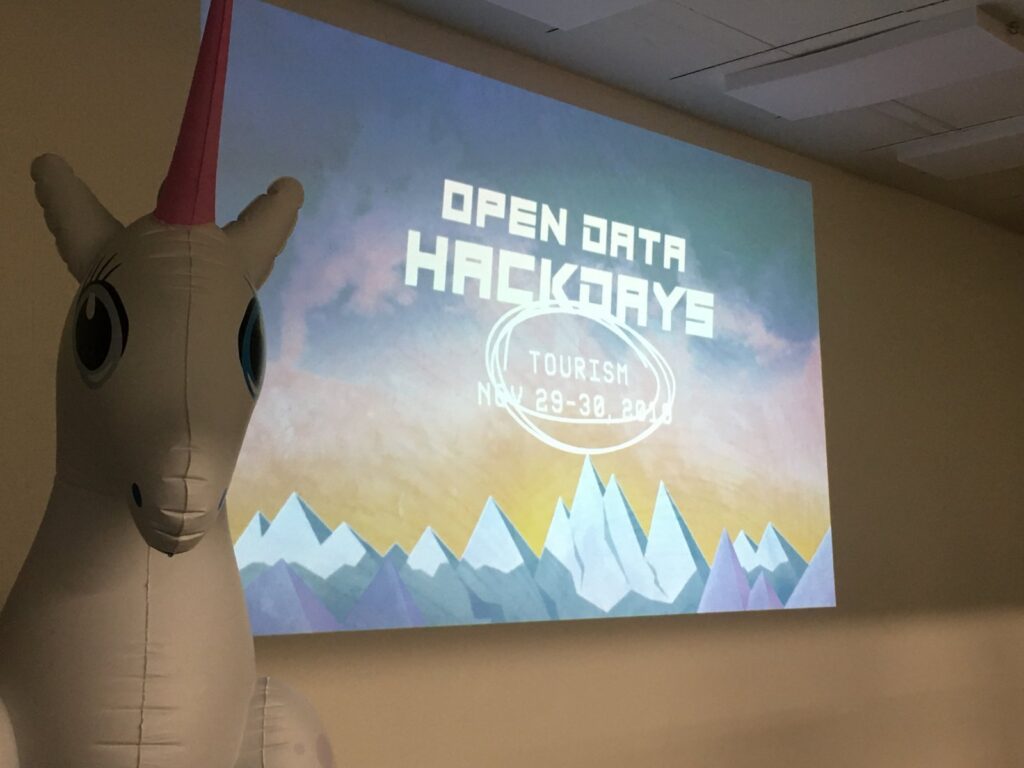
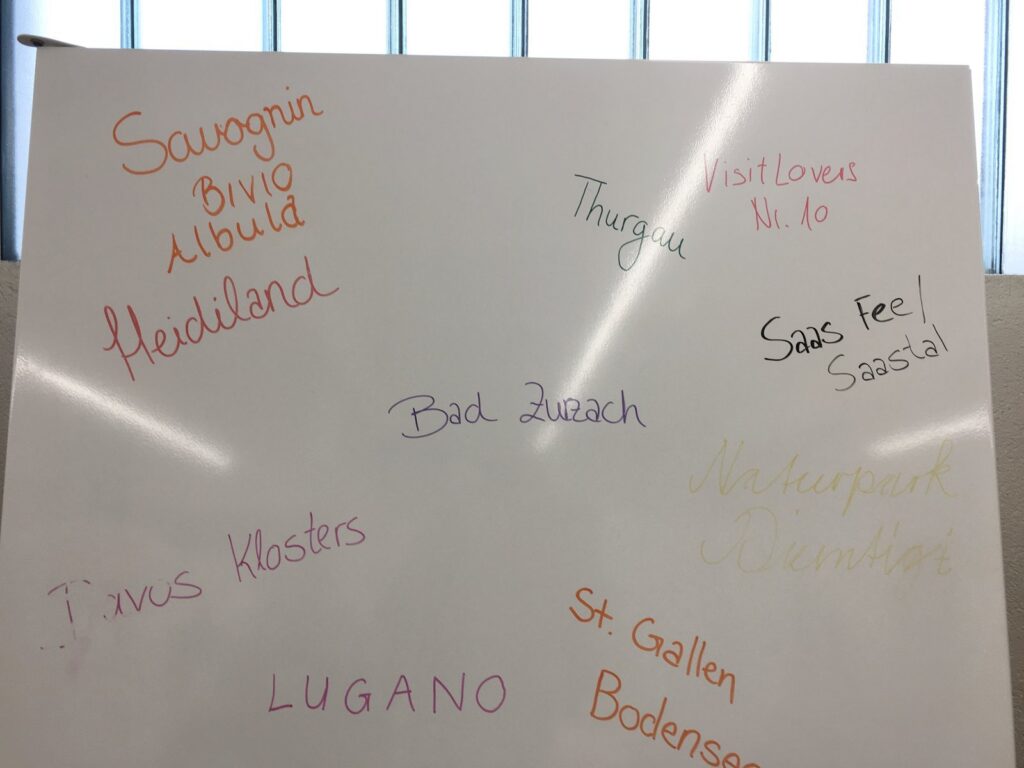
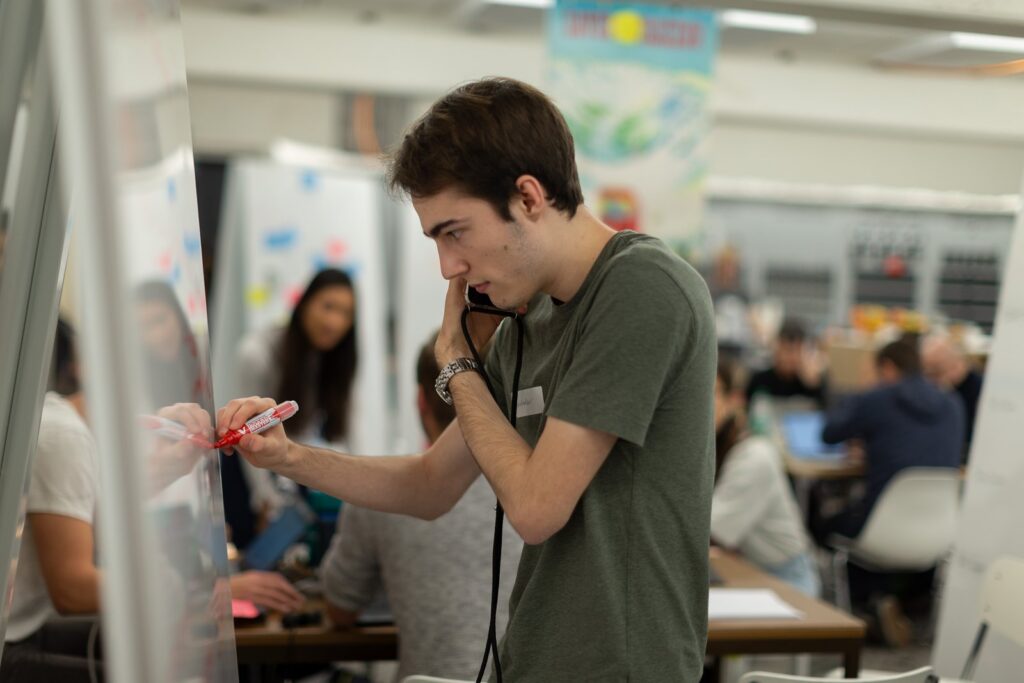
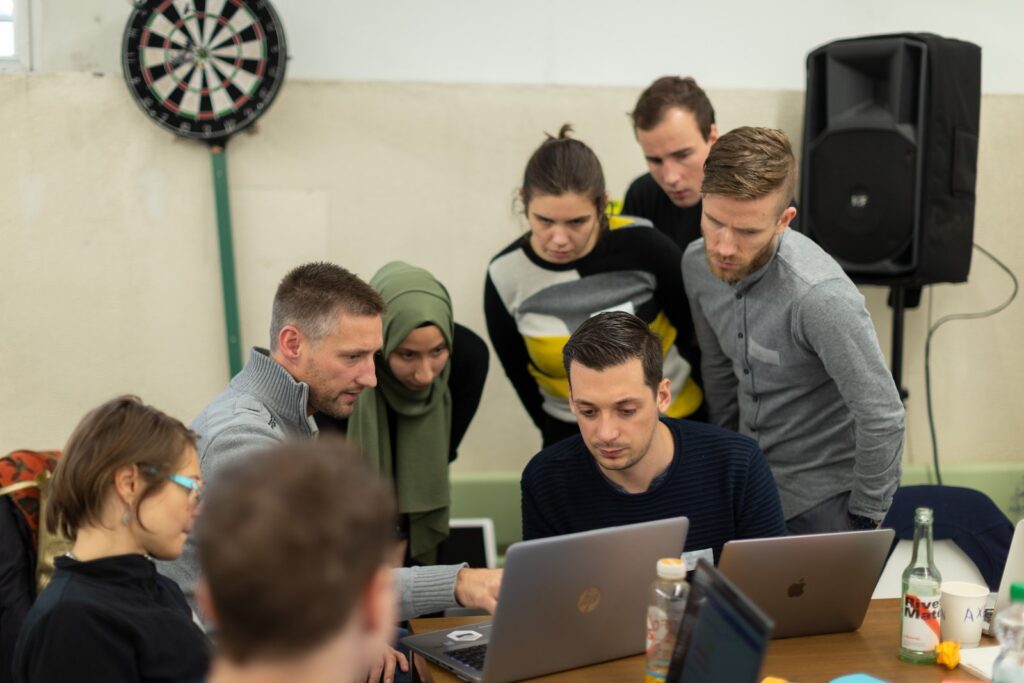
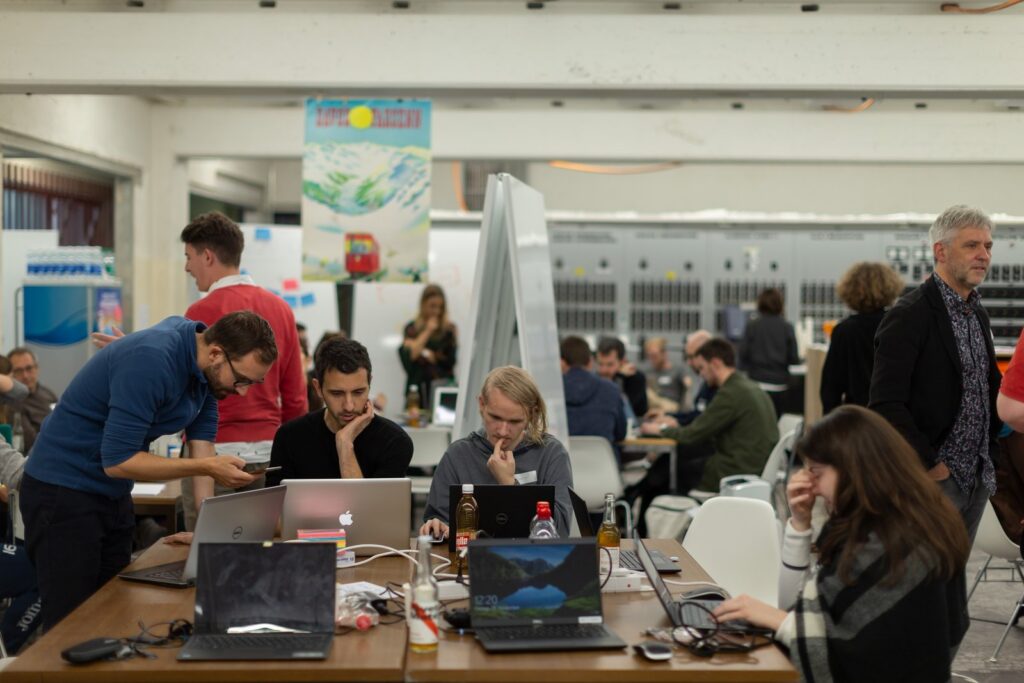
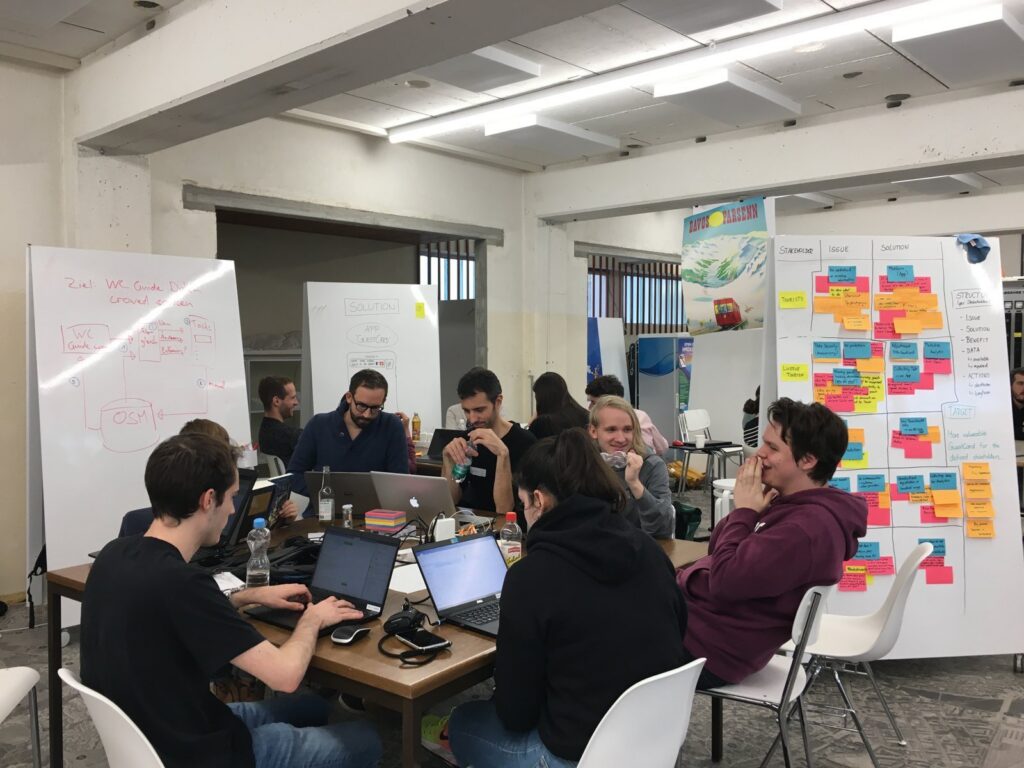
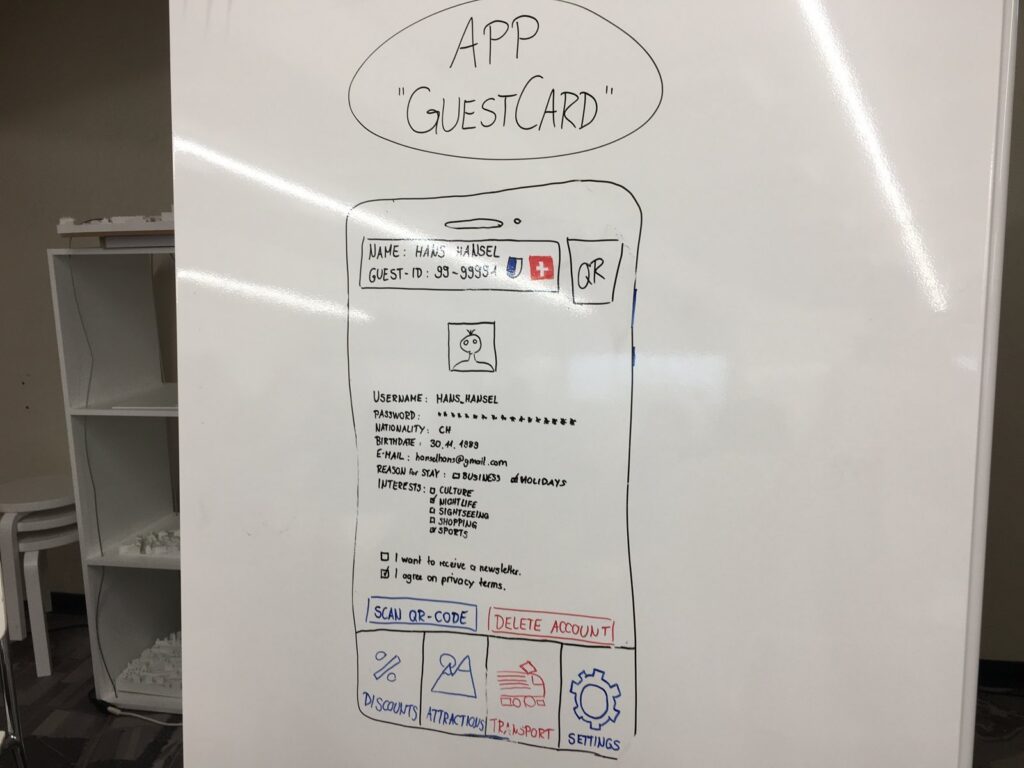
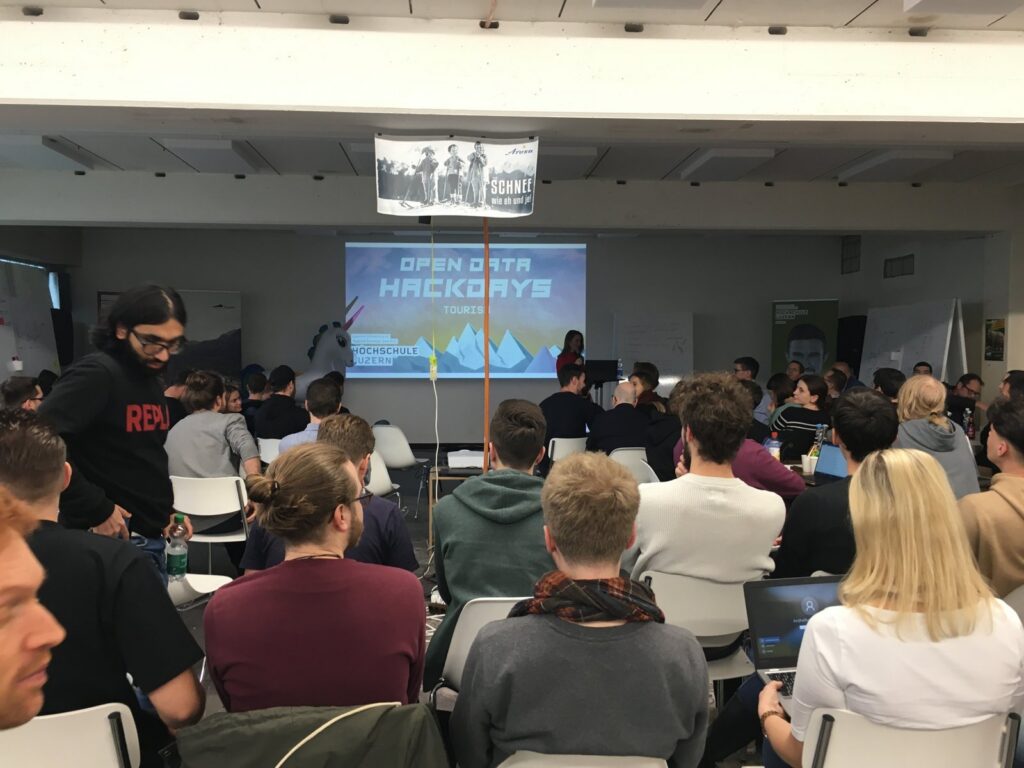
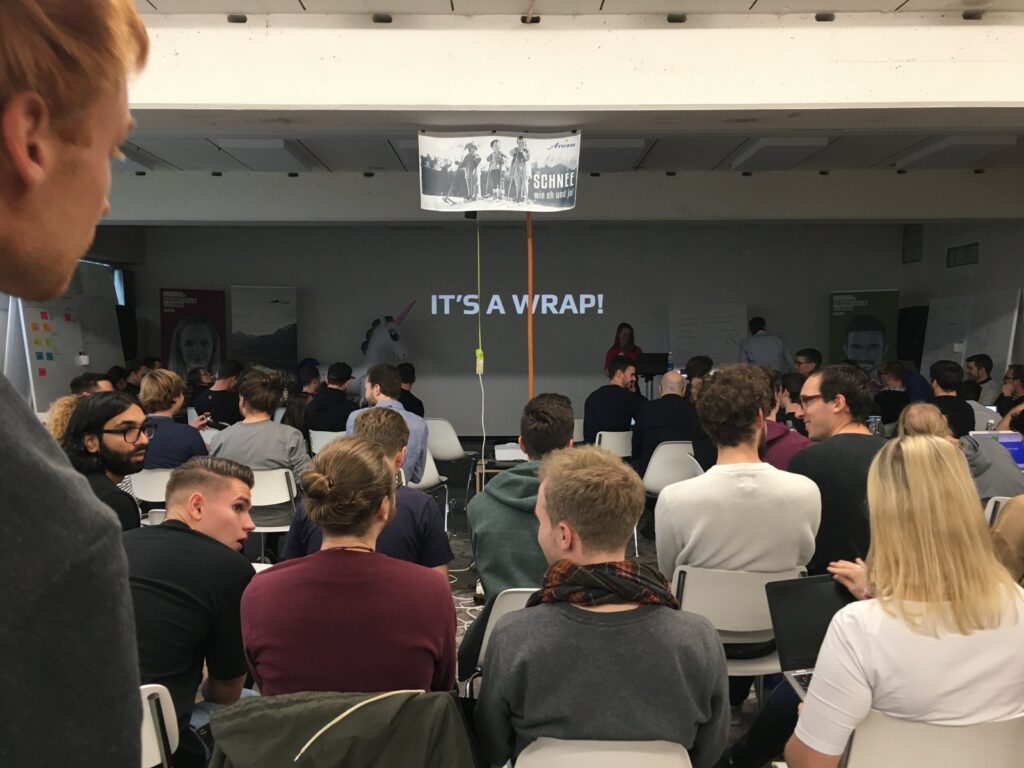
Photo: Tanja Schär, HSLU/Patrick Kälin, Nikki Böhler
Documentation et enregistrements
Défis
- Individualized Travel Guide – Thurgau Bodensee Tourismus
A tool that helps tourist office staff compose individualised trips for guests in a tourism area, recommending the most eventful and most beautiful route.
→ Résultat: Individualized travel guide
Description du défi
MVP: A tool that helps tourist office staff compose individualised trips for guests in a tourism area and recommends the most eventful, most beautiful route.
Datasets: Timetables (ships, trains), opening hours (restaurants, museums, trails), guest data.
Remarks: Changing the timetables is out of scope. The timetables of the Lake Constance ships are not coordinated, which means long waits for guests and laborious manual planning at the tourist office.
- Data Quality Comparison – Engadin Tourismus AG, Heidiland Tourismus AG
Compare the opening hours of mountain railways published on Google MyBusiness with the effective ones, and build a crawler that pulls them from the various platforms.
Description du défi
MVP: First, an application that compares the opening hours of mountain railways on Google MyBusiness with the effective ones; second, a crawler that pulls the opening hours from the various platforms.
Datasets: Excel file with the effective opening hours of the mountain railways.
- Instagram Content Post Automation – Region Solothurn Tourismus
Re-use available content and automate posting it; the pictures are crawled through the Instagram APIs.
Description du défi
MVP: Re-use available content and automate posting it.
Datasets: Pictures crawled through the Instagram APIs (visitsolothurn, solothurn-city).
Remarks: Code is available – can you put it together? Smaller tourism organisations such as Solothurn or Bad Zurzach have very limited resources for social media.
- Email Management System – Engadin Tourismus AG
An algorithm that categorises incoming e-mails by their content, possibly integrated as an Outlook add-in.
Flavio WillimannGeorg Oberer→ Résultat: Email Management System
Description du défi
MVP: An algorithm that categorises incoming e-mails by their content, possibly integrated as an Outlook add-in.
Datasets: The content of over 5000 e-mails in two sets, one already categorised, one not.
Remarks: A complement would be answering simple standard questions automatically or generating e-mail templates.
- Resources Forecasting for Tourist Offices – Arosa Tourismus, Lenzerheide Marketing und Support AG
Ein tagesscharfes Prognosetool für die Personalplanung der Tourismusbüros, aus Schalterkontakten, E-Mails und Telefonaten gegen Wetter, Ferien und Feiertage.
Ronald Maurhofer Daniel BarcoSibylle HaasLars TönzEliane AlbisserRamon Schildknecht
 André EggliKenny Floria
 Peter Janes
→ Résultat: Forecasting for tourist offices Arosa & Lenzerheide
Description du défi
MVP: A time-saving and cost-efficient forecasting tool with daily precision, for better staff planning, lower staff costs and flexible working hours at the tourist offices.
Datasets: Labels: counter contacts, e-mails and phone calls; predictors: weather, school and public holidays. Opening hours or events can be added.
Remarks: Data from 2016 to August 2019. Two teams worked on it, one for Arosa and one for Lenzerheide.
- Davos Day Trip Experience – Destination Davos Klosters
A web or mobile application around the experience of short-term travelling to Davos Klosters.
Description du défi
MVP: A web or mobile application, in the language and platform of your choice, around the experience of short-term travelling to Davos Klosters.
Datasets: Points of interest, weather, hiking trails, maps and routing APIs and other travel-related data.
Remarks: Any publicly available third-party services, APIs, open source projects and libraries are welcome.
- Who is Our Guest? – St.Gallen-Bodensee Tourismus
Mehr über die Besucherinnen der eigenen Webseite erfahren, um Marketingmassnahmen massschneidern zu können.
Description du défi
MVP: Learn more about the visitors of the own website in order to tailor marketing measures – for example through a contest or a survey disguised as an activity planner.
Datasets: Web form, Google Analytics, the CRM tool Wilken.
Remarks: Profiling through newsletters and city tour forms already exists, Google Analytics is in use.
- Open Sourcing Water Fountains, Literally! – MY-D Foundation
Die über 100 Brunnen aus der Maturaarbeit «Nidwaldner Brunnen» von Jana von Holzen öffnen: Bilder auf Wikimedia Commons, Daten in Wikidata und OpenStreetMap.
Maisa MelezanovicChristopher HilfingJohannes WildermuthCarlo Del RossiDaniel Sigrist Stefan F. Keller
→ Résultat: Open sourcing water fountains, literally!
Description du défi
MVP: High-school graduate Jana von Holzen assembled more than 100 water fountains in her Maturaarbeit «Nidwaldner Brunnen». This data should become open: the pictures on Wikimedia Commons, the fountains in Wikidata and OpenStreetMap.
Datasets: Water fountain data including pictures.
Remarks: The information becomes publicly available, including for projects like water-fountains.org. Four students of HSR were prepared to tackle the challenge, more were welcome.
- Guest Card Lucerne – Luzern Tourismus AG
Ein Konzept, wie sich Datengewinnung und Datennutzung der Gästekarte Luzern ausbauen lassen.
Bastian GschwendtnerDominik GablerMichael WechslerNatascha BenczeMarco SutterTania Hardy→ Résultat: Guest Card Lucerne
Description du défi
MVP: A concept for expanding the data generation and data use of the Guest Card Lucerne – which guest information could be gained, processed and used, and how.
Datasets: None; conceptual documents available.
Remarks: Basic data such as demographics, number of nights or other services is stored centrally and anonymised seven days after departure (GDPR).
- Tag-Manager Implementation – VisitLovers
Ein Tracking-Setup für die Webseite VisitLovers.ch über einen Tag-Manager, dokumentiert und für Dritte nachnutzbar.
Marcel UlrichGranit SermaxhajJan BachAnzhelika AlexandrakiSilvan Burnand→ Résultat: Tag Manager implementation
Description du défi
MVP: A tracking setup on the website of VisitLovers.ch via a tag manager to measure, analyse and rate customer behaviour for marketing.
Datasets: The website.
Remarks: The approach is to be documented and made available to third parties such as other start-ups.
- Kurtaxen – Determine All Overnight Stays – Heidiland Tourismus AG
Eine genauere Methode, die Kurtaxen in der Ferienregion Heidiland zu kontrollieren, aus Anmeldeformularen, Abwasser-, Strom- und Bevölkerungsdaten.
→ Résultat: Visitor's Tax: Determine all overnight stays
Description du défi
MVP: Owners of holiday homes in Heidiland pay the visitor’s tax either per stay or as a flat fee. A more precise method is needed to check the visitor’s tax of all accommodation.
Datasets:
- more than 30,000 visitor’s tax registrations since January 2010 (arrival, departure, guests per home)
- 1623 registered holiday homes with area, rooms and beds
- daily wastewater data of the last three years in Flumserberg and the neighbouring area
- monthly electricity data for Flumserberg, January 2017 to September 2019
- monthly population figures for Flumserberg since February 2017
- Pedestrian Volumes – Urban Mobility Research
Hochrechnungsfaktoren aus Kurzzeitzählungen von Fussgängerinnen, samt einem Werkzeug zur Dateneingabe.
→ Résultat: Pedestrian volumes
Description du défi
MVP: Extrapolation factors from short pedestrian counts, with a data entry tool.
Datasets: Several years of automatic pedestrian counts (24/7) in Zurich and Basel-Stadt, all open.
Remarks: How can daily or yearly pedestrian volumes be derived from two-hour counts, and can a tool make that easy? The same would apply to cycling data.
- People in Public Spaces – Urban Mobility Research
Analyse von Besucherinnen und Touristen im öffentlichen Raum aus Webcam-Bildern und Videomaterial.
Description du défi
MVP: Analysis of visitors and tourists staying in and walking through public spaces, from video and still images.
Datasets: Public webcam images of Sechseläutenplatz Zurich and Jesuiten- and Theaterplatz Lucerne; video footage of several afternoons at Schwanenplatz Lucerne.
Remarks: How many people stay for how long, depending on the weather; counting and managing pedestrian flows, e.g. at traffic lights.
- Dashboard Concept GastroSuisse – GastroSuisse
Ein Konzept, wie sich Daten des Gastgewerbes auf der Webseite von GastroSuisse als interaktives Dashboard mit Benchmarks darstellen lassen.
→ Résultat: Dashboard Concept for GastroSuisse
Description du défi
MVP: A concept for structuring and showing data of the hotel and restaurant industry on the GastroSuisse website as an interactive dashboard, with a public area and a closed one where members compare themselves with national and cantonal benchmarks.
Datasets: Annual member survey (turnover, costs, taxes, profit, cost structure), economic and labour market data.
Remarks: Mainly about ideas: design, functions, structure and customer guidance.
- Measure Impact of the Fair-Preis-Initiative – GastroSuisse
Die Wirkung der Fair-Preis-Initiative aus Wirtschaftsdaten und Studien berechnen und für Stimmende sichtbar machen.
Description du défi
MVP: Calculate the impact of the Fair-Preis-Initiative from economic data and studies and present it attractively to voters (app, video, graphic, website).
Datasets: Price differences between Switzerland and the EU, price comparisons, VAT data, economic data and studies.
- Outdoor Tours – a Recommender System – Outdooractive AG
Ein Empfehlungssystem für Outdoor-Touren.
Description du défi
MVP: An algorithm that suggests alternative tours when a tour tends to be overcrowded.
Datasets: Tour data (opentourism.net).
Remarks: Recommendations should rest on social and economic sustainability and on identifying overcrowded tours and places.
- An Alternative to Google's Local Guides – Outdooractive AG
Eine Alternative zu Google Local Guides.
Description du défi
MVP: A concept with one or more scenarios as an alternative to Google Local Guides.
Remarks:
- principles of open source and open data must be considered
- identify possible data sources and their benefits
- consider data quality and accessibility
- Chat Advisor – Zürich Tourismus
Ein interaktives Auskunftssystem über Chat-Eingaben, das Fragen zu Betrieben, Öffnungszeiten und Anlässen beantwortet.
Description du défi
MVP: An interactive information system using chat input.
Datasets: Open data of the City of Zurich on tourism (zt.zuerich.com/en/open-data).
Remarks: The solution must answer basic questions about establishments, opening hours, events and the like.
- WLAN City Lucerne – Stadt Luzern
Das Verhalten der Nutzerinnen des städtischen WLAN besser verstehen und daraus einen besseren Dienst für die Gäste bauen.
Carmela WeyAlexander KuscheJulian Zihlmann Patrick SommerLaura HutterClaudio GiancaterinoSilvan WehrliAdeline BornaticoMichael WechslerAndreas Dorta
→ Résultat: WLAN City Lucerne
Description du défi
MVP: Better understand the behaviour of the users of the public WiFi and build a better service for the guests.
Datasets: Open data of the City of Lucerne with the WiFi logins.
Remarks: Overnight guests with the Guest Card Lucerne can use the free network «Free Wi-Fi – LUZERN.COM».
- WC-Guide goes Open Data – Verein Sonnenschauer
Die über 5000 Einträge des WC-Guide, des grössten Verzeichnisses öffentlicher Toiletten der Schweiz, als offene Daten nach Wikidata und OpenStreetMap bringen.
→ Résultat: WC-Guide goes Open Data
Description du défi
MVP: The WC-Guide is the largest directory of public toilets in Switzerland, with more than 5000 entries. A new progressive web app replaces the iOS and Android apps and is open source; now the data should go to Wikidata and OpenStreetMap as open data.
Datasets: A working set for Lucerne, about 90 toilets, as XML with type, coordinates, name, remarks and properties such as stairs or changing table.
Remarks:
- prepare (script) and import the data into Wikidata
- prepare it for tools such as OSM Conflator or maproulette.org
- concept for synchronising OSM, Wikidata and wc-guide.ch
- keep the data quality, as entries have so far been checked one by one
- <404 – challenge not found> (…yet) – Zürich Tourismus
Eine offene Challenge ohne gesetztes Ziel: aus den offenen Daten der Stadt Zürich ein neues Werkzeug oder Produkt für den Tourismus bauen.
Description du défi
MVP: A new tourism tool or product.
Datasets: Open data of the City of Zurich on tourism.
Remarks: The City of Zurich provides a lot of open data. This challenge has no set goal: use the data to create something new for tourism.
- Accommodation Location Recommendation – Zürich Tourismus
Interessen angeben und eine Rangliste der am besten gelegenen Unterkünfte erhalten – mit den offenen Daten der Stadt Zürich.
Description du défi
Imagine you’re planning your next city trip. You have an idea of what you’re interested in, but you don’t want to commit to a too rigid plan. While looking for suitable accommodation, you want to be as close to your points of interest as possible. But you are not familiar with the city, so you waste time researching.
What if, instead, you just specify your interests and get a ranked list of the best situated accommodations? Creating a tool that does exactly that is the goal of this challenge. The data is provided by the City of Zurich under its open data license.

Programme
Vendredi 29 novembre
- 09:00–09:15
Petit-déjeuner d’accueil
Arrivée au Laboratorium, badges au welcome desk.
- 09:15–09:30
Accueil
Le comité d’organisation étudiant a accueilli les participant·e·s et présenté le déroulement, le règlement de la maison, le code de conduite et le canal Slack.
Stephana MüllerOrganisationskomitee, KommunikationTanja SchärLeitung Organisationskomitee - 09:30–10:30
- 10:30–11:30
Formation des équipes
Des équipes de deux à huit personnes se sont formées autour des challenges; dix ont été retenus.
- 11:30–12:30
Début du hacking
Compte à rebours, et c’est parti.
- 12:30–13:30
Repas de midi
- 13:30–19:00
Hacking
Travail en équipes; le comité d’organisation passait régulièrement voir chaque groupe.
- 19:00–20:00
Dîner
- 20:00
Suite du hacking – open end
Qui le souhaitait a travaillé toute la nuit; des places pour dormir étaient prévues à la Rösslimatte de la HSLU.
Samedi 30 novembre
- 08:00–12:00
Petit-déjeuner et hacking
- 12:00–14:00
Repas et dernier sprint
À 11h30, le compte à rebours jusqu’à la fin a commencé.
- 14:00–14:45
Accueil des invités et input tourisme
L’événement s’est ouvert aux ami·e·s, soutiens et à la branche touristique; Martin Barth, CEO du World Tourism Forum Lucerne, a parlé en interview de la collaboration entre secteurs.
 Martin BarthCEO World Tourism Forum Lucerne
- 14:45–15:45
- 15:45–16:00
- 16:00–18:00
Apéro et perspectives
Avec un aperçu des prochains Hackdays: Energy Data Hackdays en mars 2020 en Argovie et «Shaping our City» en novembre 2020.
Lire l’annonce d’origine

Épisode 01 : tourisme
powered by Tourist Office Lab et
Master of Science in Applied Information and Data Science
de la Haute école de Lucerne
Nous comptons déjà 70 esprits brillants à bord.
INSCRIS-TOI MAINTENANT et ne manque pas cette première.
Lieu : Laboratorium Lucerne
Horaire : Du vendredi 29 novembre 2019, dès 9h,
au samedi 30 novembre 2019, 18h
Les 29 et 30 novembre, l’édition lucernoise des Open Hackdays aura lieu au Laboratorium à Lucerne. Ce sera le tout premier épisode d’une série d’événements semestrielle présentée par des étudiant·e·s de la Haute école de Lucerne en master Applied Information and Data Science.
Dans cet épisode, tout tourne autour du tourisme. En Suisse, le tourisme est un moteur économique important et une source de revenus essentielle pour beaucoup. Créons de nouvelles solutions capables de bousculer le tourisme en Suisse, de faire naître des expériences époustouflantes et de rendre la branche plus transparente, plus sociale et plus durable.
Programme
- Vendredi 29.11 · 09.00 Petit-déjeuner de bienvenue · 09h15 Introduction · 09.30 Pitch des challenges · 10.30 Formation des groupes · 11.30 Début du hacking · 12h30 Déjeuner · 19.00 Délicieux dîner · 20.00 Suite du hacking – open end · Samedi 30.11 · 08.00 Reprise individuelle du hacking avec petit-déjeuner · 12.00 Déjeuner · 14h00 Exposé (à annoncer) – ouvert aux ami·e·s & soutiens ! · 14.45 Présentation de vos créations & discussion ouverte · 16.00 Apéro de clôture & teaser 2020
À quoi peux-tu t’attendre ?
Nos membres représentent des entreprises locales, des institutions de premier plan et des organisations de la branche du tourisme suisse. Avec tes compétences et les connaissances métier de ces partenaires, nous développerons de nouvelles solutions pour différents challenges. Imagine une application qui améliore l’expérience de ton voyage et privilégie les itinéraires pittoresques plutôt que les plus rapides. Ou un outil qui visualise les défis du tourisme dans les villes et les aide à résoudre les goulets d’étranglement.
Nous proposons un lieu inspirant, avec une douche rafraîchissante et, pour les participant·e·s qui veulent travailler toute la nuit, des possibilités de dormir. Bien sûr, il y aura aussi de quoi nourrir les cerveaux, des jeux de données passionnants, une foule motivée et des savoir-faire et connaissances variés venus du monde entier.

Unissons nos forces !
Nous t’invitons à participer à ce tout premier épisode des Open Data Hackdays à Lucerne. Rencontrons-nous. Innovons. Explorons le potentiel des données touristiques ouvertes, partageons nos connaissances, apprenons les un·e·s des autres et passons à la création.
Les Open Data Hackdays sont ouverts à toutes les personnes intéressées qui veulent travailler de manière créative avec des données touristiques en tant que développeur·euse·s de logiciels, designers, data scientists, analystes ou porteur·euse·s d’idées.
PS: Afin de planifier correctement la restauration, nous te prions de nous informer au moins 5 jours avant l’événement, soit d’ici au 24 novembre,si tu dois (malheureusement) annuler ton inscription aux Hackdays. Les places sont limitées et nous détestons le gaspillage alimentaire.
Challenges
Jette un œil aux premiers challenges annoncés (en cours, il y en aura d’autres !) :

Questions fréquentes
Ai-je besoin d’une idée de projet ou d’une équipe pour participer ?
Non, ce n’est pas nécessaire. Au début des Hackdays, différentes idées de projets et différents challenges sont présentés. Tu peux contribuer à l’idée de projet qui t’inspire le plus.
Les Hackdays sont-ils réservés aux développeur·euse·s ?
Non, les Hackdays ne s’adressent pas seulement aux développeur·euse·s, mais aussi aux spécialistes de la visualisation & designers, économistes, passionné·e·s de voyage, journalistes, esprits originaux, personnalités hors du commun & faiseur·euse·s.
Dois-je rester sur place pendant près de 48 heures ?
Non, ce n’est pas nécessaire. L’important est que tu contribues au succès du projet que tu as choisi et que tu discutes avec ton équipe de quand et où tu travailles
Que dois-je apporter ?
Le plus important : n’oublie pas ton ordinateur portable. Tu voudras peut-être aussi apporter ton carnet, des stylos et éventuellement un sac de couchage. Nous te fournirons toutefois du matériel de base, comme du papier, des flipcharts, des Post-it, de quoi manger et boire.
Y a-t-il assez d’électricité sur place ? À ce que je vois, votre lieu n’en donne pas vraiment l’impression pour l’instant…
Pas d’inquiétude, nous sommes préparé·e·s au pire. Wifi haut débit & alimentation électrique garantis. Rien ne pourra nous empêcher de relever ces challenges.
Les repas du Kupferkessel sont-ils GRATUITS ?
Oui, tous les repas sont gratuits pendant les deux jours. Il en va de même pour les possibilités de dormir ; les Hackdays sont gratuits pour tous les participant·e·s : CHF 0.-, gratuit.
Puis-je amener des ami·e·s ou des soutiens ? / Puis-je venir sans travailler sur un challenge ?
Bien sûr, mais par respect pour notre communauté qui hacke, conçoit et réfléchit d’arrache-pied – pas avant samedi 14h. Nous devons nous concentrer sur les challenges et mériter l’apéro 😉
Comment créer une ambiance créative sur place ?
Nous sommes ravi·e·s de collaborer avec Iwona de Creative Switzerland, qui nous soutient avec des outils époustouflants : creative-switzerland.com
Qui a réalisé ce superbe visuel ?
C’est Alexandra Wegener, un grand merci à elle. http://alexandra.wegener.ch
D’autres questions ?
N’hésite pas à demander ! hackdays@opendata.ch
L’événement est rendu possible par :

Équipe d’organisation
 Jonas WidmerLocation
 Lisa FickelChallenge-Support
 Andreas LiebrichDozent, Challenges mit dem Tourist Office Lab
 André GolliezProjektinitiator HSLU
 Nikki BöhlerOpendata.ch
 Oleg LavrovskyOpendata.ch, Plattform und Technik
 Rafael EnzlerTourist Office Lab, Wissenstransfer